Site Navigation Breadcrumbs | Aerosol Fire Suppression & Extinguishers in Palo Alto, California
Aerosol Fire Suppression
Aerosol Suppression in Palo Alto, California
Aerosol fire suppression systems use rapidly cooled aerosol spray mist to cover large surface areas immediately with an ultra-fine disbursement of extinguishing agent.
Handheld Portable Aerosol Fire Extinguishers
Handheld portable aerosol fire extinguishers should not be considered an alternative to installation of traditional fire extinguishers.
Handheld portable aerosol fire extinguishers should be used as directed by manufacturer we encourage you to read reviews and product usage for all handheld portable aerosol fire extinguishers in Palo Alto, California.
Aerosol Fire Suppression Service in Palo Alto, California
Aerosol fire suppression systems are fixed extinguishing systems may be installed specifically for electrical equipment, mining operations, power plants, utility companies, loaders, dip tanks, paint spray booths, data centers, aviation, airplanes, tactical military vehicles, naval ships, marine boats, satellite and space stations. Aerosol fire suppression extinguishers can be made specific to Class A, B, C, D and K fire hazards in Palo Alto, California.
Aerosol fire suppression systems should be serviced according to manufacturer specifications, Federal, OSHA, State, NFPA Standard for Fixed Aerosol Fire Extinguishing Systems and/or municipal fire code in Palo Alto, California.
Aerosol Suppression Designed for what Fire Hazards
Class A,
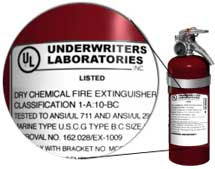
The UL Listed, Letter A on the extinguisher, designates it for use on cloth, wood and paper.
Class B
The UL Listed, Letter B on the extinguisher, designates it for use on combustible and flammable liquids, grease, gasoline, oil and oil-based paints.
Class C
The UL Listed, Letter C on the extinguisher, designates it for use on electrical equipment like appliances, tools or other equipment that is plugged into an electrical outlet.
Class D,
The UL Listed, Letter D on the extinguisher, designates it for use with flammable metals.
Class K,
The UL Listed, Letter K on the extinguisher, designates it for use with vegetable oils, animal oils and fats in cooking appliances.
The UL alphabetic letter
Represents the Classes of Fire extinguisher designed for.
Extinguishers are designed for specific fire hazards
UL Listed Aerosol suppression are designed for up to 5 Classes of Fire.
Which may include the following Classes A, B, C, D and K fire hazards.
Aerosol fire suppression systems have many practical installation options and can be equipped to protect against almost every fire hazard your structure, building or facility may face in Palo Alto, California. Aerosol suppression systems help to contain and suppress "Small Fires", if a fire gets out of control, evacuate all occupants and call 911.
An aerosol generator is a self contained extinguishing unit that contains an aerosol forming compound which, during a controlled combustion process within the generator, produces an ultra-fine aerosol extinguishing agent that may be effective than other alternatives. Avionics aerosol suppression systems have included halon, carbon dioxide and, recently, water mist with the requirement to address both enclosed avionics systems and open cabin fires.
Aerosol generator units are constructed of various material such as, stainless steel components, many are UL Listed for both area and volumetric coverage, many require no piping, nozzles, or other distribution equipment.
In effect, an aerosol suppression generator acts as a self-contained storage container, production of extinguishing suppressant and delivery device.
NFPA Standard for Fixed Aerosol Fire Extinguishing Systems
NFPA offers additional details regarding the state-of-the-art aerosol fire extinguishing technology. This comprehensive Standard provides requirements for the design, installation, operation, testing and maintenance of condensed and dispersed aerosol fire extinguishing systems for total flooding applications.
It also covers performance requirements and methods of testing for condensed aerosol systems, dispersed aerosol systems and associated components.
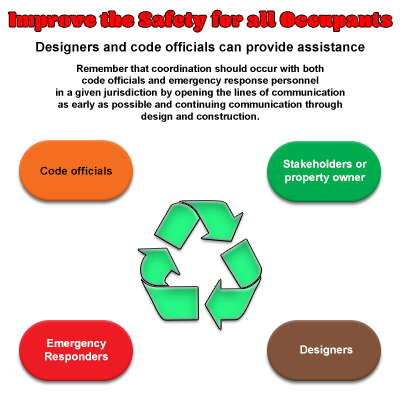
Improve the Safety for All Occupants in Palo Alto, California
Stakeholders and owners should collaborate and work together with local code officials and emergency responders before installing any fire protection systems (fire suppression, extinguisher, alarm, sprinkler or AES system).
Work together. When stakeholders and property owners work together, collaborate with code officials and emergency responders, they get a better understanding of how to protect building occupants and prepare safety measures, helping the companies that perform service to install, service or maintain fire protection systems understand the fire hazards and danger that need to be addressed.
This helps to improve the overall safety for all occupants and the community of Palo Alto, California.
Stakeholders and property owners should work together with code officials, responders and designers in Palo Alto, California. Before installing fire protection equipment or devices always check with authorities having jurisdiction first (AHJ's).
General Requirements
General extinguisher requirements for stakeholders and business property owners in Palo Alto, California.
OSHA 1910.157(c)(1) The employer shall provide portable fire extinguishers and shall mount, locate and identify them so that they are readily accessible to employees without subjecting the employees to possible injury.
OSHA Portable Fire Extinguisher Emergency Standards
Provide portable fire extinguishers for employee use. Select and distribute the extinguishers based on the types of anticipated workplace fires and on the size and degree of hazard that would affect their use. [29 CFR 1910.157(d)(1)], OSHA.
Aerosol fire extinguisher and fixed suppression systems should be serviced according to manufacturer specifications, State Codes, Osha Portable Fire Extinguisher Standards and/or municipal fire code in Palo Alto, California.
Service Contracts
Creating an annual service contract with a locally licensed fire extinguisher company, will help stakeholders and business owners comply with federal and local fire codes in Palo Alto, California.
If your service contract is maintained by a hard working extinguisher company, you probably will never see a fire code violation.
Should you ever see a fire code violation, maybe it's time to look for another extinguisher service contract provider. Use our list of local fire extinguisher companies, to help keep the travel times and distance shorter.
By shopping licensed extinguisher companies in Palo Alto, California you can obtain estimates that will detail the costs to install, service, repair, test, inspect, maintain, perform annual tags & certifications, provide the (6) six year teardown or hydrostatic testing when needed.
Extinguisher Service and ITM's
Fire extinguishers require service, inspections, hydrostatic testing, refill, recharge or replacement and/or a physical inspection that can issue the annual tag, once service complete. All extinguisher types require this service, including portable, wheeled or fixed unit, performed by licensed extinguisher company.
Learn more about fire safety, prevention and life safety in Palo Alto, California, including the dangers of wildfires and the wildland urban interface (WUI).
What is the wildland urban interface (WUI), how it affects your community and how it can affect your property in Palo Alto, California.
Discover why fire sprinkler and smoke alarms work, and how we should use them in Palo Alto, California.
Reduce injury or death from fire, by teaching the basic facts. Fire is hot and fast. Smoke is dark and CO₂ is poisonous and deadly.
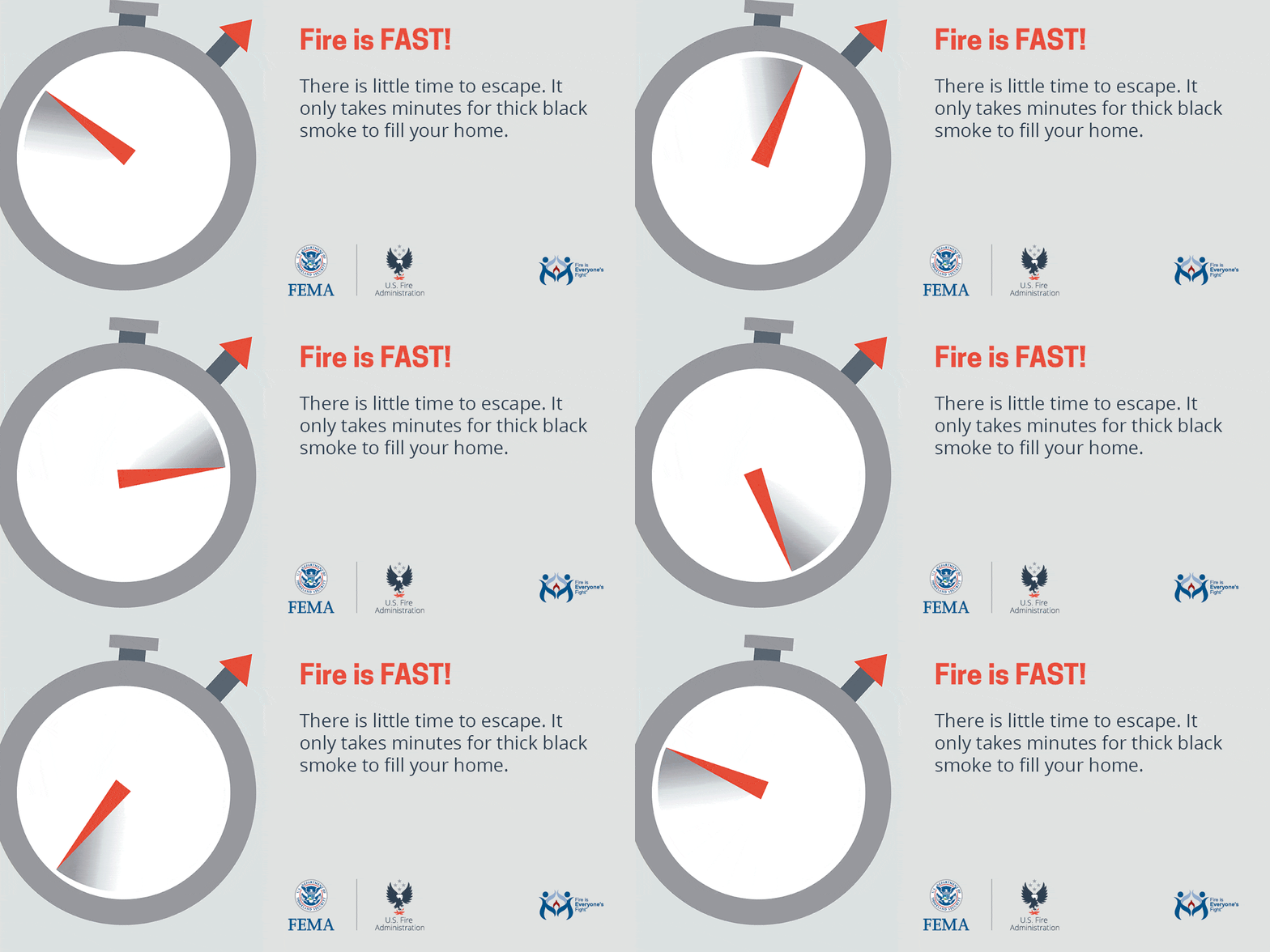
When most people think of fire, it is bright; it isn't thick, black smoke that can quickly fill a home. (Smoke Danger, USFA 1pg. PDF) 👀
Residents could have less than 2 minutes to escape a home fire once the smoke alarm sounds
The increasing severity of home fires due to modern building contents and open space configurations makes it crucial that people understand the dangers of smoke and are prepared to leave their homes immediately in the event of fire.
Prepare for a Fire
Recommended by USFA to install, service and maintain fire protection systems in Palo Alto, California.
Install smoke alarms, test them monthly, replace batteries yearly, replace smoke alarm unit every ten 10 years.
Create and practice fire escape plans, involve the community of Palo Alto, California to create a wildland urban interface plan of evacuation.
Schools, office buildings, factories, and other commercial buildings have benefited from fire protection sprinkler systems for over a century. FA-43/February 2008 Fire sprinklers save lives, (USFA 4pg. PDF) 👀
Fire extinguishers are designed for "small fires". Fire departments in Palo Alto, California can help with fire extinguisher training and answer questions that community members may have.
Install "heat alarms" in garage, shops and warehouses. Smoke alarms in garages can sound because of a change in temperature and humidity, as well as dust, fumes and insects. Heat alarms are made to not be affected by these conditions.
Prevent Fire
Appliance and electrical fire safety in Palo Alto, California. Failure to clean (31%) was the leading factor contributing to the ignition of clothes dryer fires in homes from 2018-2020. Never use an extension cord with a major appliance. The extension cord can overheat and start a fire. Do not overload outlets.
Basements and garages present additional fire safety risks compared to other home areas. Flammable liquids, storage of combustibles, gas appliances and electrical tools can lead to fires. Garage fires tend to spread farther and cause more injuries and dollar loss than fires that start in all other areas of the home.
Lithium-ion batteries and other types of batteries present fire dangers if community residents don't follow product instructions when using, storing or disposing of them. You should store lithium-ion batteries at room temperature when possible. Do not charge them at temperatures below 32° °F (0° degrees °C) or above 105° °F (40° degrees °C).
Candles are a part of many celebrations, but open flames make them dangerous if they tip over or when they are placed too close to anything that can burn. On average, 20 home candle fires are reported each day.
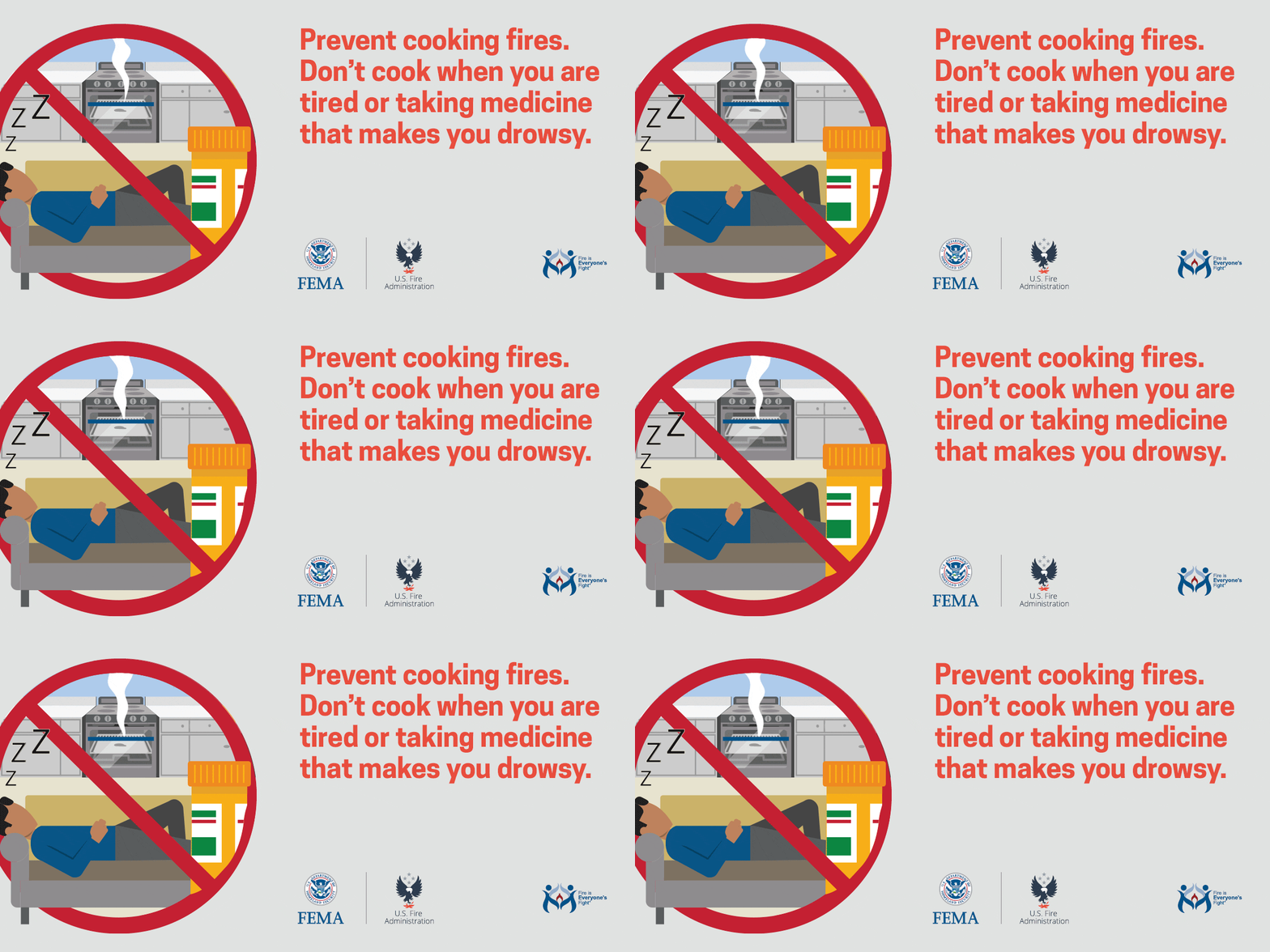
Cooking is, by far, the leading cause of home fires and home fire injuries. In 2021, fire departments in the United States responded to an estimated 170,000 home cooking fires. These fires caused an estimated 135 deaths, 3,000 injuries and over $494 million in property loss. The leading factor contributing to ignition in non confined home cooking fires was unattended equipment (37%).
Although trending downward since the early 1980s, heating fires remained the second leading cause of home fires in 2021. An estimated 32,200 home heating fires were reported to fire departments within the United States. These fires caused an estimated 190 deaths, 625 injuries and $442 million in property loss. Home portable heater fires were only 3% of all home heating fires annually for 2017-2019, but they accounted for 41% of fatal heating fires in homes.
Decorating homes and businesses is a long-standing tradition around the holiday season. Unfortunately, these same decorations may increase your community's chances of a fire. Almost one-third of home Christmas tree fires are caused by electrical problems.
Chemicals and other hazardous materials used in homes can be dangerous to people's health and the environment. It's important that residents follow product instructions when using, storing or disposing of home hazardous materials to prevent fires and unintentional poisoning. An average of 1,700 home fires per year are caused by instances of spontaneous combustion or chemical reaction.
Severe weather can happen at any time, in any part of the country. That's why it's important for your community to be ready for severe weather events and to understand the fire risks that can come with them. The town of Ocean Isle Beach, North Carolina, experienced several fires during and after Hurricane Isaias.
With modern lightweight construction and open space configurations, occupants may have less than 2 minutes to escape, once the smoke alarm sounds, USFA.
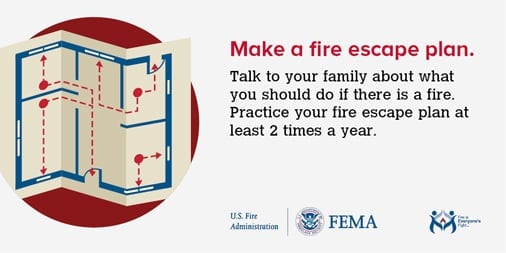
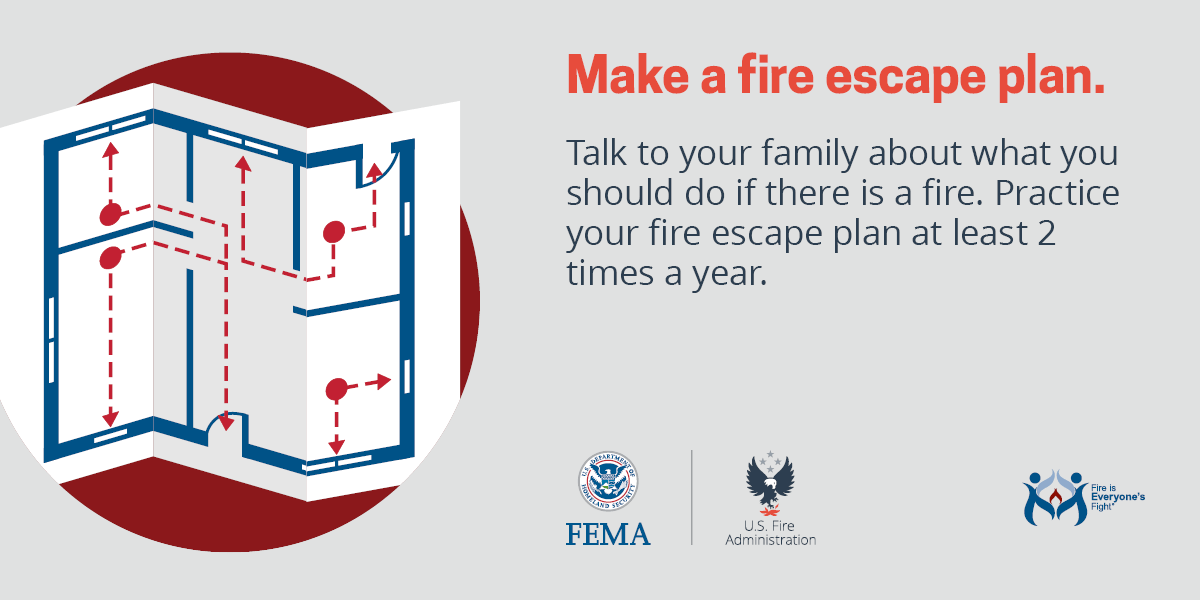
Draw a map of your home. Include all doors and windows.
Find 2 ways out of every room.
Make sure doors and windows are not blocked.
Choose an outside meeting place in front of your home.
Practice your home fire drill with everyone in the home.
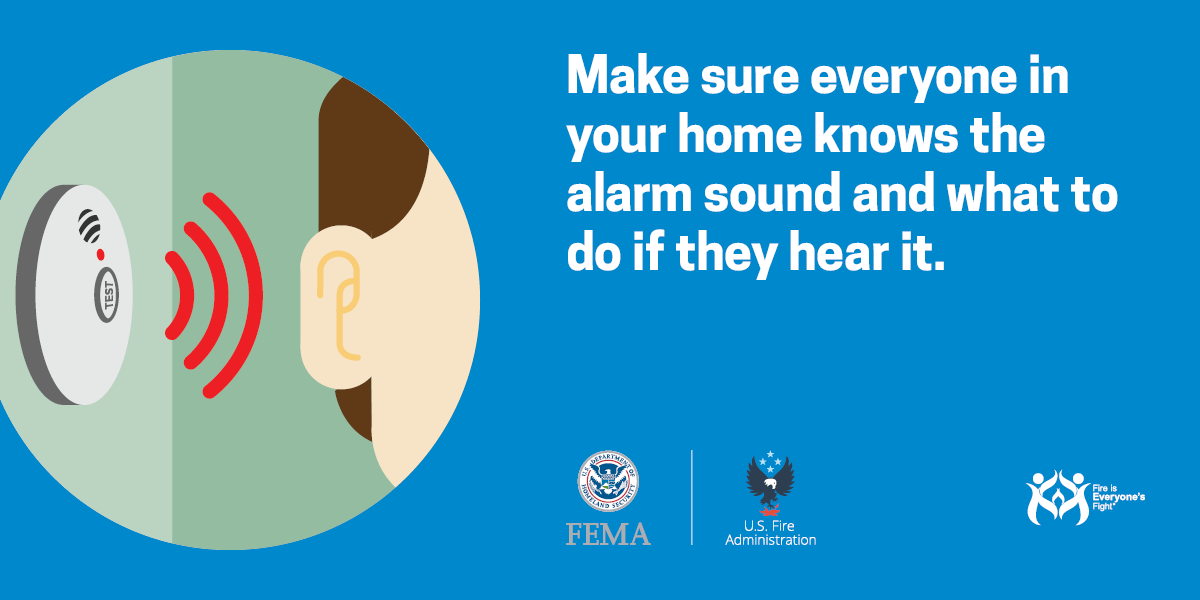
Push the test button to sound the smoke alarm and start your home fire drill.
Get outside to your meeting place.
If a fire, call 9-1-1. Contact 911 and tell them where you are. It may take awhile for the fire department to clear the building. Stay on the phone with the fire department to help them locate you.
Teach children fire is hot, smoke is dangerous, alarms BEEP!, use stairs, stay low to ground when exiting, get outside, stay out and how to call 911, USFA.
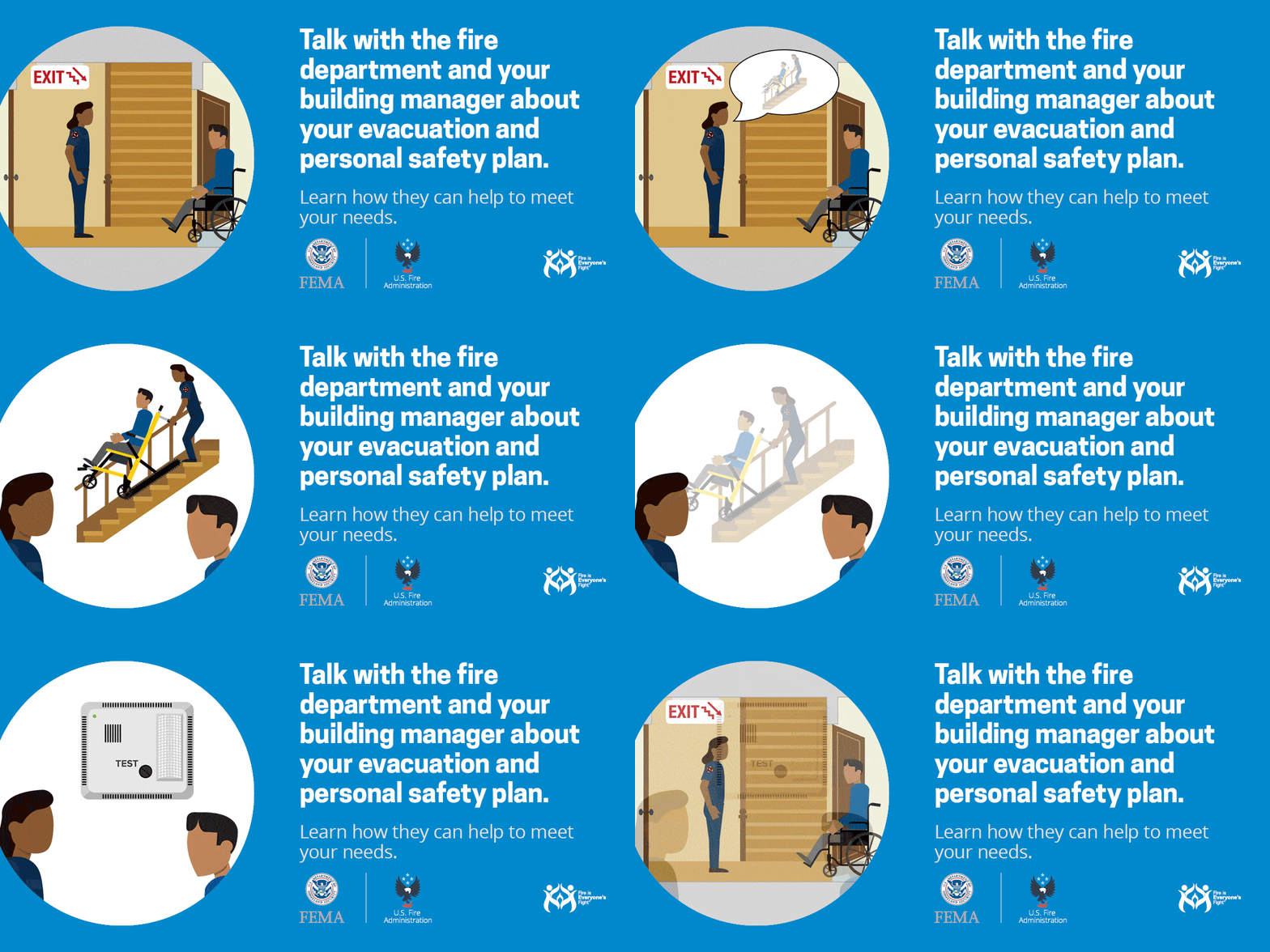
The fire service can help people with disabilities understand their fire risks and build fire prevention plans around their abilities.
Have smoke alarms on every level of your home, inside bedrooms and outside sleeping areas.
Interconnect your alarms so that when one sounds, they all sound.
If you are deaf or hard of hearing, use smoke alarms with a vibrating pad, flashing light or strobe light. These accessories start when your alarm sounds.
Test your alarms every month.
If possible, live and sleep near an exit door.
You’ll be safest on the ground floor if you live in an apartment building. If you live in a multistory home, sleep on the first floor. Being on the ground floor and near an exit will make your escape easier.
Physical disability was the second leading human factor contributing to fatalities in residential buildings (30%).
In addition to potential deaths and property loss, people may lose their jobs and the community may lose a vital service provided by the businesses, USFA.
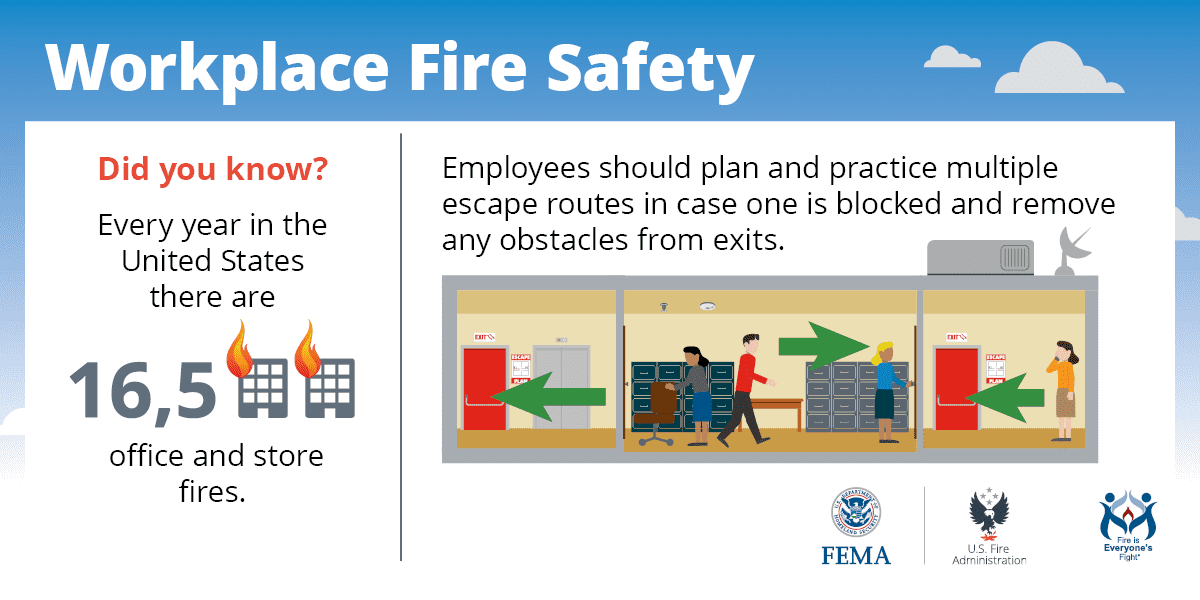
There were 16,500 office and store fires in the United States in 2020 that caused $932 million in direct property damage.
A fire in an office or store can be devastating to your community.
Workplace Escape Plan
Create a fire escape plan and practice fire drills with employees and personnel, teach them about your safe outside areas. Teach to walk orderly, not run, push or shove.
Post clear fire escape plan image posters (you are here) on every level of a building. Never use the elevators in fire emergencies, use the stairs.
Teach employees about exit locations, escape routes, and installed fire protection equipment, smoke alarms, alarm pull stations and portable fire extinguishers (for use on "small fires").">
If you are unable to evacuate, from a fire. Remain calm. Seal the door gaps with cloth, towels or jackets. Jam a flag or t-shirt, to hang out of a closed window, notifying your location in the building to firefighters and emergency responders.
Eliminate Fire hazards
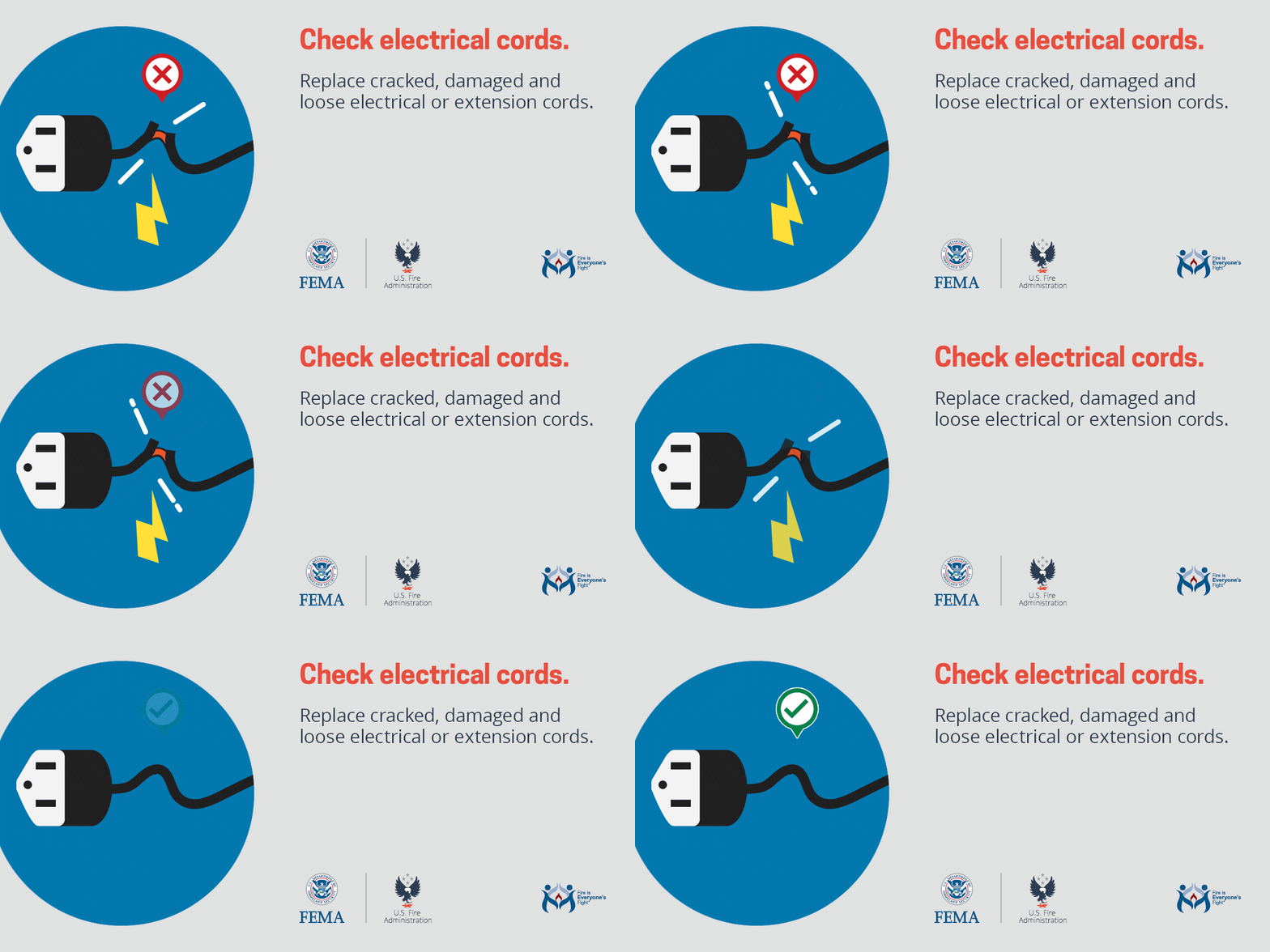
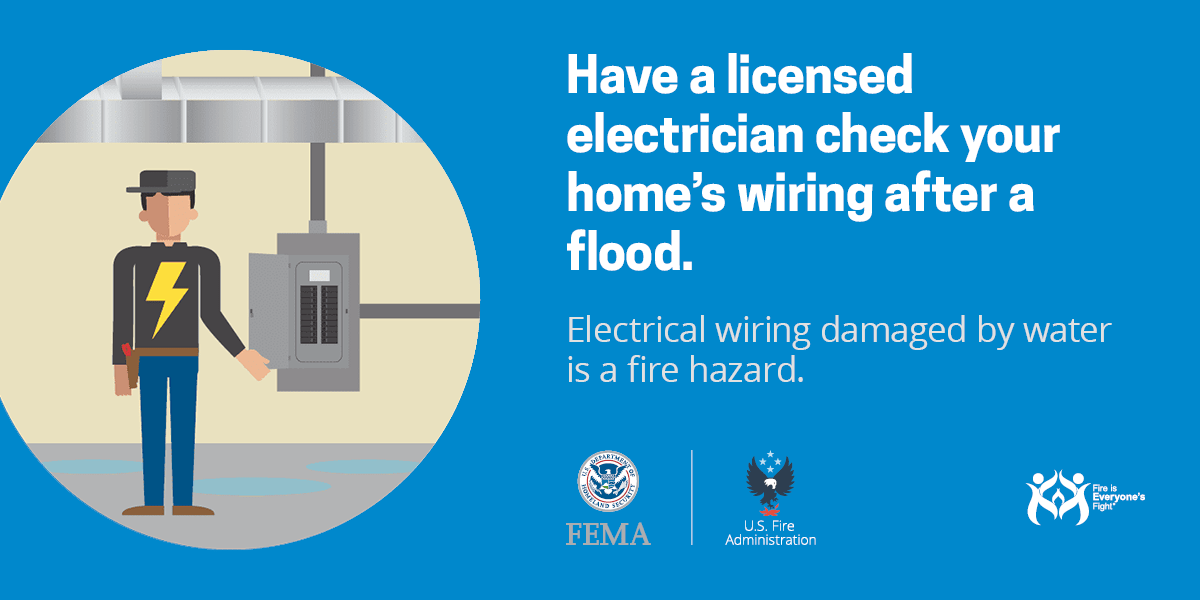
Employees should check for damaged or overloaded electrical outlets, cords or extensions. Let management know, so if needed they can contact an electrician in Palo Alto, California to correct known issues.
Prepare workplace for emergencies
Stakeholders and business owners in Palo Alto, California should ensure smoke alarms and/or heat alarms and fire sprinklers are installed and properly maintained.
In the event of a fire in the workplace, call 911, notify co-workers, start evacuation of all occupants.
Employees should keep anything that can burn away from electrical equipment.
Personnel should never leave portable heaters unattended.
Fires in high-rise and condominium buildings are especially dangerous in Palo Alto, California.
Occupied floors located high above the ground present many serious challenges for fire and life safety, USFA
Encourage residents to know where all the exit stairs are and how to escape in an emergency.
Close doors behind you exiting rooms or leaving building.
Pull the fire alarm on your way out to notify the fire department, co-workers and your neighbors.
Use the stairs to get out. Do not use the elevator unless directed by the fire department.
Go to your outside meeting place and stay there. Call the fire department. Tell the fire department if someone is trapped in the building.
If trapped inside, seal all doors with fabric or jackets. Open a window slightly and place a bright cloth, shirt or fabric, to signal your location. Close the window with fabric securely hanging, so that it may be visible outside.
The increasing severity of home fires due to modern building contents and open space configurations makes it crucial that people are prepared to leave their homes immediately in the event of fire.
Residents could have less than 2 minutes to escape a home fire once the smoke alarm sounds.
Buildings with engineered, lightweight structural systems, such as lightweight wood trusses, that are susceptible to sudden and early collapse. lightweight steel truss for office, industrial buildings, floor and roof assemblies in residential structures, wooden i-beams, parallel-chord trusses, truss joists, laminated veneer lumber (LVL), cross-laminated timber (CLT).
Lightweight construction is less expensive to build, which can lower consumer price, it is designed lighter, easier and more cost effective to install than traditional methods, but creates additional fire risk.
While they can match or exceed the strength of conventional lumber, they are more prone to fire-induced collapse because their connections and members can fail rapidly when exposed to heat. Potentially injuring or killing, occupants evacuating, occupants trapped, firefighters and emergency responders.
The challenge for the fire service then becomes how the safety of fire service personnel can be increased in lightweight construction with the understanding that sprinkler systems may not be achievable solution.
Thus introducing pre-fire surveys, fire inspections, and construction site inspections. The use of building marking systems, decals, tags or digital logs, in Palo Alto, California
To help prevent serious injury or death from a structural collapse of a lightweight modern building. USFA’s Marking Systems for Lightweight Residential Construction.
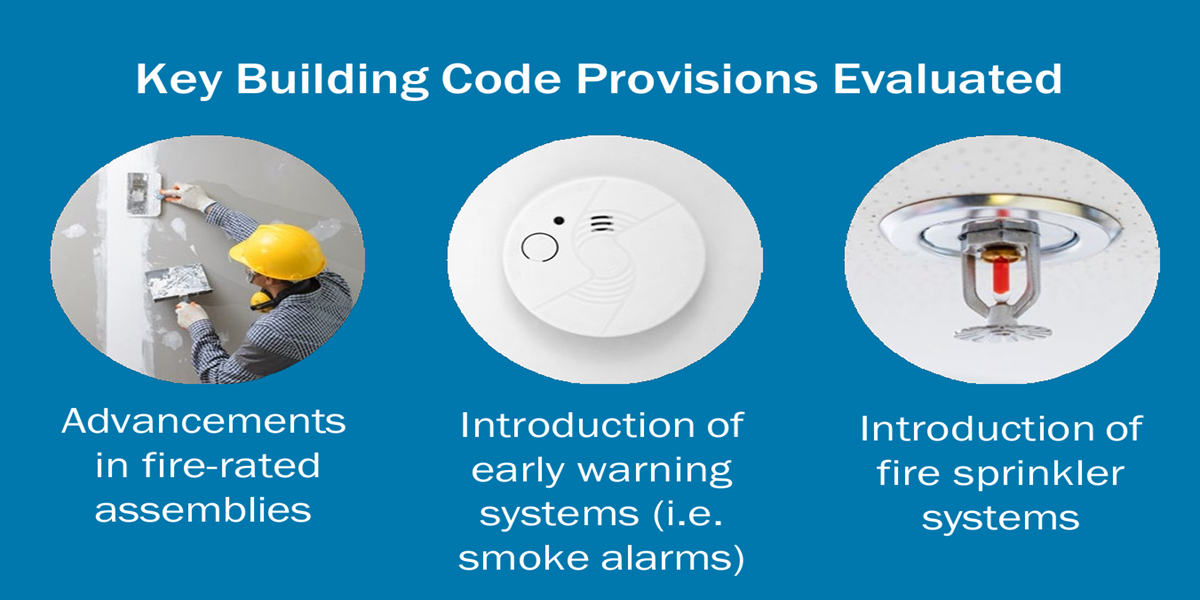
Stakeholders and property owners in Palo Alto, California can reduce impact using earlier warnings systems is recommended (e.g., smoke alarms and monitored alarm systems), faster suppression (e.g. sprinklers) and /or use fire extinguishers on "small fires", and reduced spread between buildings.
Prevention ideas, codes focus on roof cover, enclosed eaves, meshed vents, and fire-resistant exterior siding material, which help suppress ignition around the building and prevent wildfire embers from entering homes. (Building codes save, FEMA 1pg. PDF) 👀
Below are some helpful tips for residents in Palo Alto, California to prevent kitchen and cooking fires.
Stand by your pan. If you leave the kitchen, turn the burner off.
Watch what you are cooking. Fires start when the heat is too high. If you see any smoke or the grease starts to boil, turn the burner off.
Turn pot handles toward the back of the stove so that no one can bump them or pull them over.
Keep a pan lid or baking sheet nearby. Aluminum foil if nothing else. Use it to cover the pan if it catches on fire. This will put out the fire.
Clean cooking equipment
Clean cooking equipment after each use. Move the appliances if needed to get behind and underneath, be cautious with connected gas and electrical lines when attempting to move. Crumbs in a toaster or grease on the stove can catch on fire.
If you have a fire in your oven, do not open. Turn-off the oven, and let the contents completely cool before opening and cleaning
If you have a fire in your oven and the flames escape the oven. Evacuate all occupants, get outside and call 911.
Turkey Fryers
Turkey fryers can tip over easily, spilling hot cooking oil over a large area. Make sure your turkey fryer is on a sturdy, level surface and do not move it once it is in use.
Make sure it is at least 10 feet from your home and not under roof eaves.
An overfilled cooking pot will cause cooking oil to spill when the turkey is put in. Test the amount of oil you need by filling your fryer with water. Place the turkey in the pot making sure the water doesn't’t get too close to the top. Measure the water and use that as a guide for filling the pot with oil.
A partially frozen turkey will cause cooking oil to splatter when you put it in the cooking pot. Make sure your turkey is fully thawed without frost on it before you fry it
Without thermostat controls, deep fryers can overheat oil to the point of starting a fire. If your turkey fryer does not have a thermostat, use a kitchen thermometer that attaches to the side of the pot. This will help you monitor the temperature of the oil.
The sides of the cooking pot, lid and pot handles can get dangerously hot. Always use protective oven mitts. Consider using an electric or air fryer. Keep children and pets at least 3 feet from the turkey fryer.
Cooking Fire Statistics
From 2017-2019, fire departments in the United States responded to an estimated 187,500 home cooking fires annually. These fires caused an estimated 165 deaths, 3,325 injuries and over $444 million in property loss.
Cause of Cooking Fires
The leading factor contributing to ignition in nonconfined home cooking fires was unattended equipment (37%).
Confined fires, those fires involving the contents of a cooking vessel without fire extension beyond the vessel, accounted for 93% of residential building cooking fires.
In 83% of nonconfined cooking fires in residential buildings, the fires were limited to the object or room of fire origin.
Additionally, cooking was the leading cause of residential building fire injuries.
Smoke alarms and automatic extinguishing systems were present in 67% and 9%, respectively, of nonconfined cooking fires in occupied residential buildings.
Decorating homes and businesses is a long-standing tradition around the holiday season.
Unfortunately, these same decorations may increase your community's chances of a fire.
Almost one-third of home Christmas tree fires are caused by electrical problems.
Never block escape exits with your Christmas tree or decorations.
Decorations with Candles
Almost half of the home decoration fires in December are started by candles. Christmas is also the "peak day" for candle fires.
Keep candles at least 12 inches away from anything that burns.
Make sure they are in stable holders and place them where they cannot be knocked down easily.
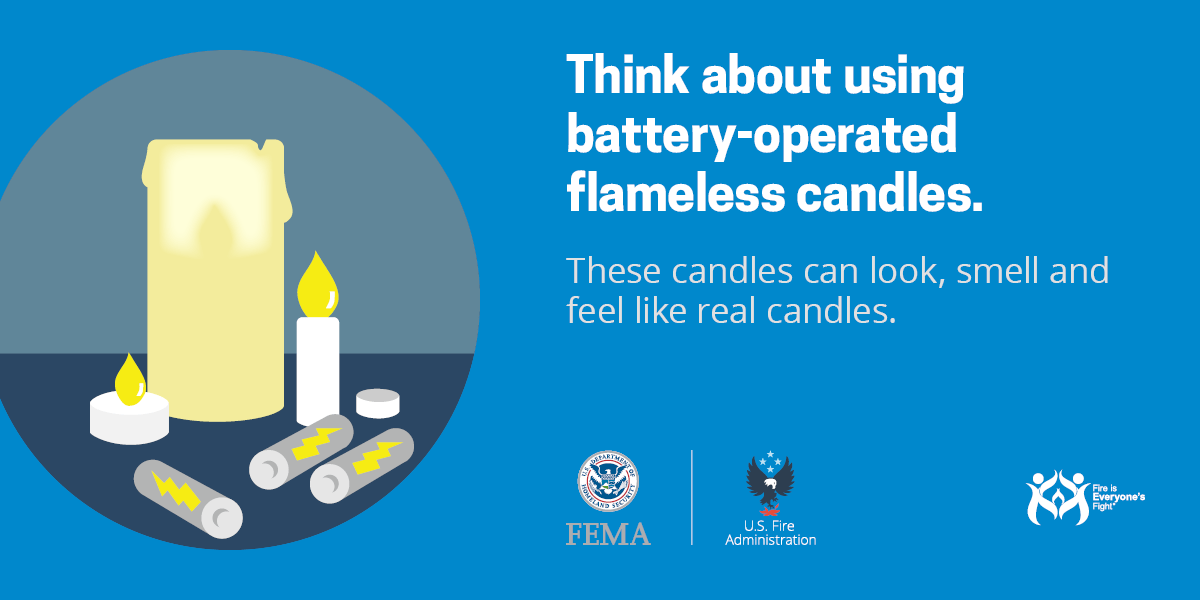
Consider using battery-operated flameless candles, which can look, smell and feel like real candles.
Electric Decorations
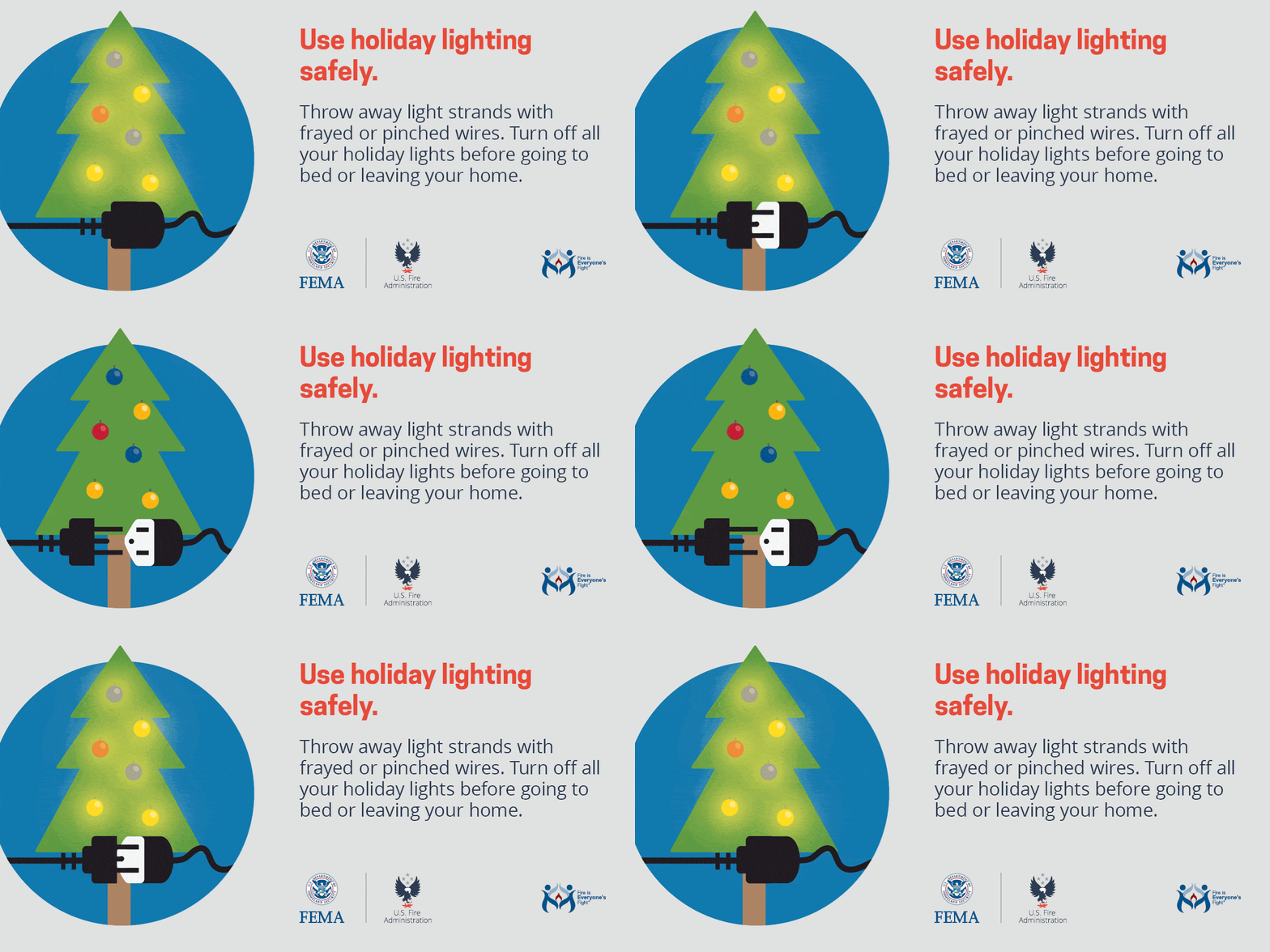
Inspect holiday lights each year before you put them up and before use. Throw away light strands with frayed or pinched wires or other defects.
Read manufacturer’s instructions for the number of light strands to connect. Never leave lights unattended.
Christmas Trees
Water your Christmas tree every day. A dry tree is dangerous because it can catch fire very easily. A dry Christmas tree can burn very hot and very fast.
Make sure your tree is at least 3 feet away from heat sources like fireplaces, radiators, space heaters, candles or heat vents. Also, make sure your tree does not block exits. More than 1 in every 5 Christmas tree fires were caused by a heat source too close to the tree.
Get rid of and dispose of your tree after Christmas or when it is dry. Check with the city of Palo Alto, California to discover the local recycle or local disposal center.
Christmas Tree Care
Natural cut trees, should be cut at a 45 degree angle at the base and placed in water.
Use only non-flammable decorations.
Use only lighting evaluated by a nationally recognized laboratory, such as Underwriters Laboratories (UL).
Continually fill and refill the tree stand basin, the basin must have water in it, "at all times".
When the tree becomes dry, discard it properly, remember that it still can catch fire easily even when thrown outside. So please dispose of your tree properly, contact the city of Palo Alto, California to discover if there are tree recycle or local disposal centers.
Whether you are heading out to the campsite, traveling cross-country or living in a recreational vehicle (RV). Recreational vehicle (RV) owners need to be aware of the fire and carbon monoxide (CO₂) hazards present in these movable structures.
Reduce RV Risks
Check propane supply lines for kinks or damage. Test all fitting connections with a gas leak detection device.
Make sure generator exhaust is pointed away and downwind of the RV.
Stay in the cooking area when preparing food. If you leave, turn off the burner.
Have a portable fire extinguisher on board that you can easily reach. Adults should take a brief training course on how to properly use an extinguisher. Remember the acronym P.A.S.S. — Pull, Aim, Squeeze, Sweep.
Keep doors and windows clear for escape and make sure they open easily. Practice a fire escape plan with everyone staying in the RV.
Don't overload the electrical outlets. Using too many electrical appliances at the same time can cause a fire.
Have a trained technician thoroughly inspect your RV at least once a year.
CO₂ in Recreational Vehicles
CO₂ is an odorless, tasteless, invisible killer that can readily build up within the small area of an RV and cause severe illness and possibly death. Improper use of generators is a leading cause of CO₂ poisoning. Malfunctioning gas-fed appliances are an additional source of CO₂ poisoning
RV Alarms
All RVs should have working CO₂ and smoke alarms installed inside to alert you of potential life-threatening hazards.
Test your alarms every month, replace batteries annually, replace alarm devices every ten years.
Recreational ignition sources
Some leading causes of unwanted wildfire ignitions are from careless or recreational use, causing unintended fires, that your responsible for.
Careless use of equipment such as mowers or tractors
Careless recreational activities like riding motorbikes without spark arrestors
Unattended or not extinguished properly campfires.
Chains from recreational vehicles sparking on the roadway
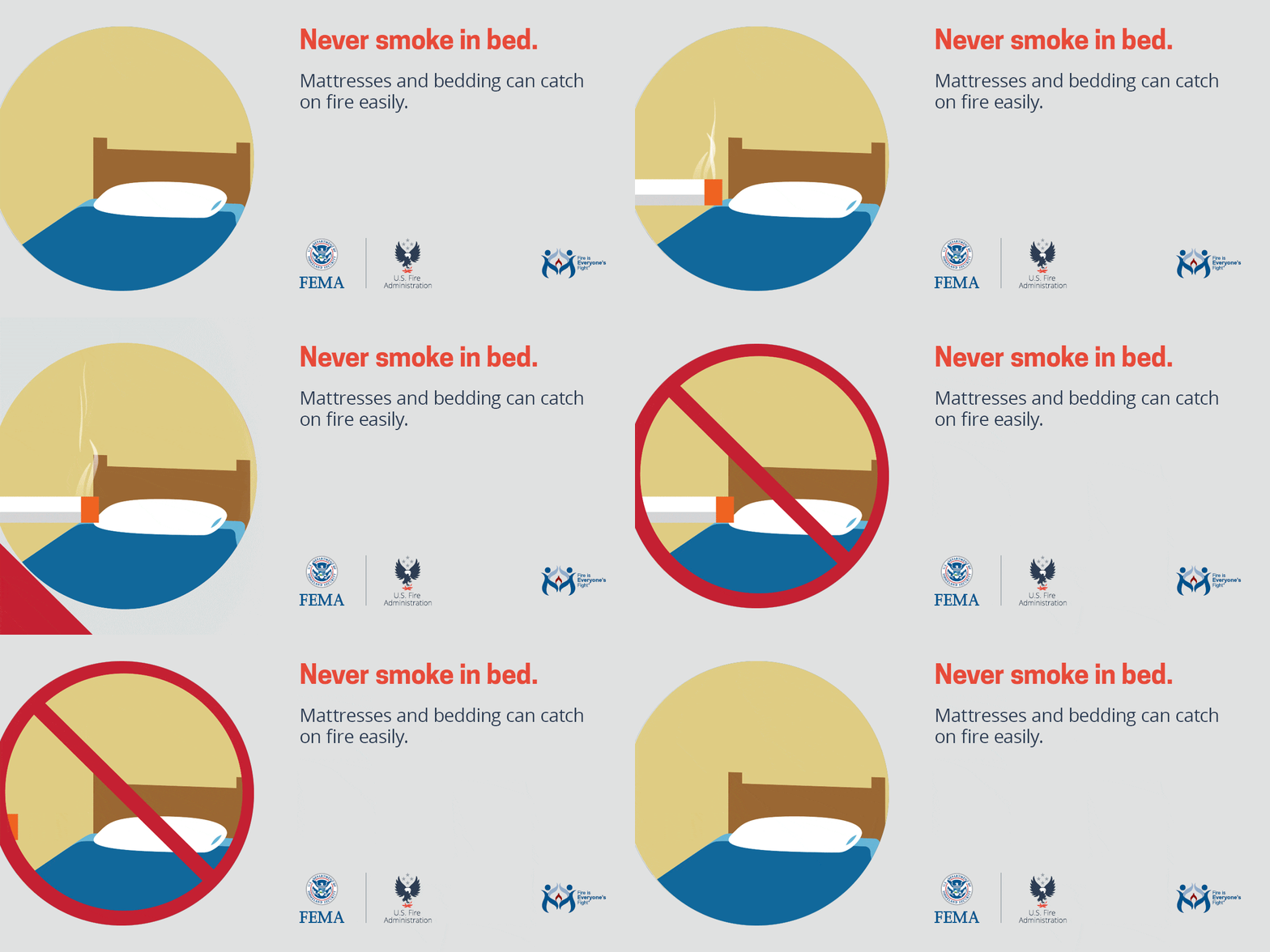
Never smoke in bed, mattresses and bedding can catch fire easily. Never smoke around oxygen, O₂ rich environments make fires burn hotter and faster, no sparks or open flame, USFA.
For many years, smoking has been a leading cause of home fire deaths.
Smoking Rules
Smoke outside. Many things in your home can catch on fire if they touch something hot like a cigarette or ashes. It is always safer to smoke outside.
Put cigarettes out all the way. Do this every time. Don’t walk away from lit cigarettes and other smoking materials. Put water on the ashes and butts to make sure they are really out before you put them in the trash.
Be alert. Do not smoke after taking medicine that makes you tired. You may not be able to prevent or escape from a fire if you are sleepy or have taken medicine that makes you tired.
Never smoke around medical oxygen, it increases O₂ which creates fire hazard. Medical oxygen can explode if a flame or spark is nearby. Even if the oxygen is turned off, it can still catch on fire.
Never smoke in bed. Mattresses and bedding can catch on fire easily. Do not smoke in bed because you might fall asleep with a lit cigarette.
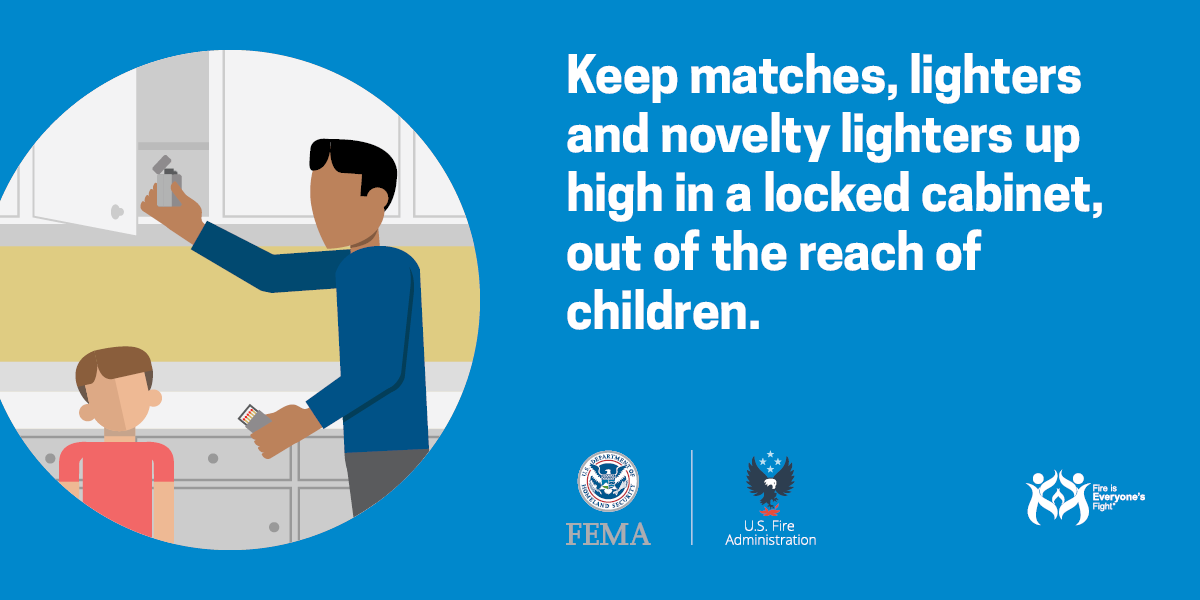
Put your cigarette out in an ashtray or bucket with sand. Use ashtrays with a wide base so they won’t tip over and start a fire. Fully extinguish all smoking materials, when done, put away lighters and matches, out of childrens reach.
E-cigarettes and Vapes
The main cause of e-cigarette fires and explosions is failure of the lithium-ion batteries.
Don't charge your e-cigarette with a phone or tablet charger.
Don't charge your e-cigarette overnight.
Protect your e-cigarette from extreme temperatures.
Store loose batteries for your e-cigarette in a case.
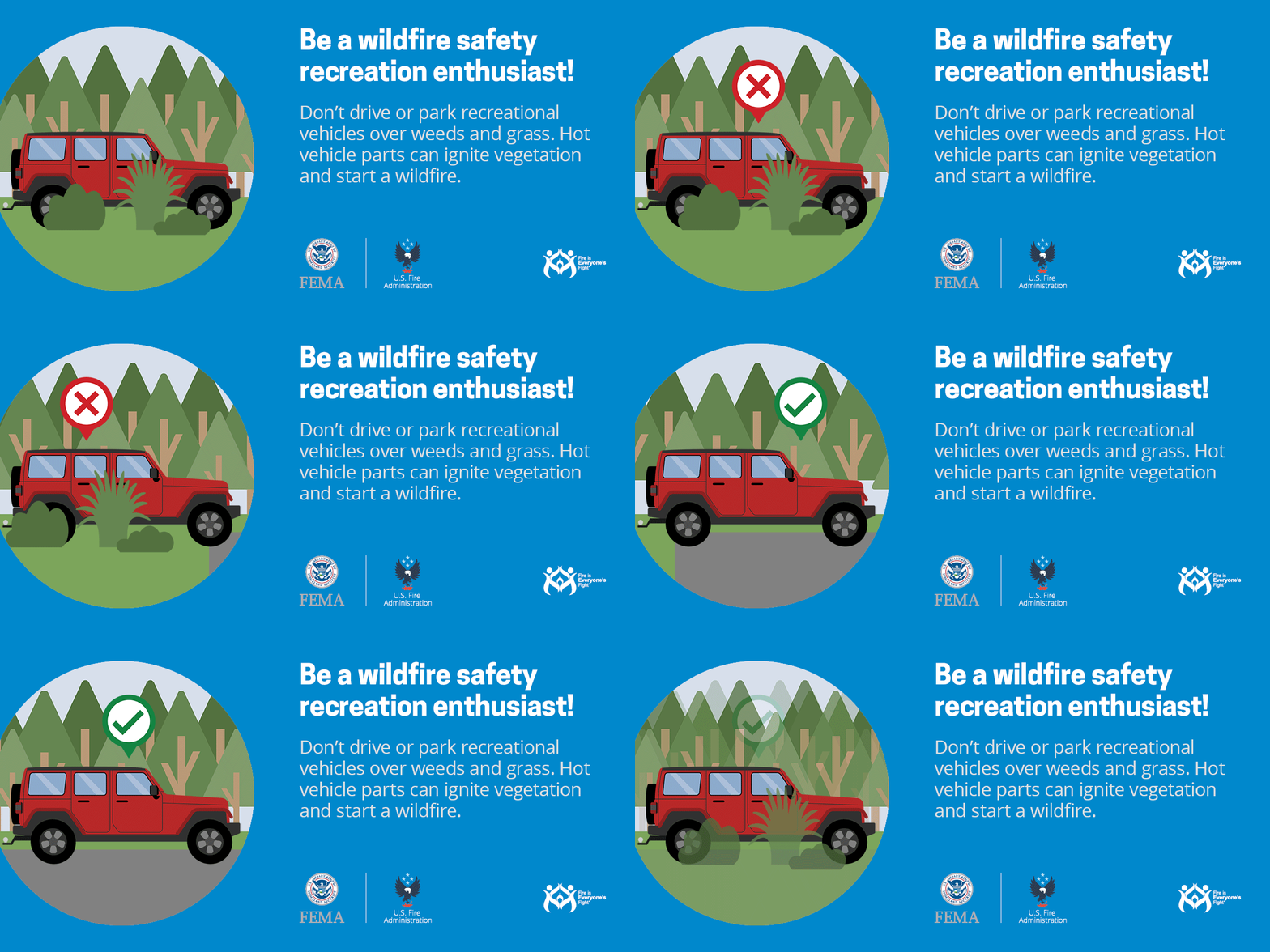
Protect people, pets and property from wildfire, USFA.
Following these tips, along with making improvements to the landscape surrounding your home, can help reduce your wildfire risk.
Keep these tips in mind as you and your family enjoy summer vacations, camping, family reunions, picnics and the Fourth of July.
Structure
Check your home's roof and the roofs of outbuildings for areas where leaves, pine needles, and other materials can build up and burn.
If you live in a wildland urban interface, consider replacing your roof with Class A fire-rated materials and installation assemblies.
Seal gaps around windows, doors, and eaves with caulk.
Seal the bottom of the garage door.
Screen all vents with 1/8 inch non-corrosive metal mesh.
Build, remodel or retrofit your home with dual-paned, tempered glass windows.
Regularly clean leaves, pine needles, and any fuel build up in gutters and around structure.
Replace or build decks with fire-resistant materials.
Remove anything that can burn from underneath decks.
Check with local officials to make sure your wildfire safety enhancements meet required codes and standards.
Plan and practice how to evacuate early
WUI Fire Property Awareness Explorer
This application allows users to search addresses or communities to gain a contextual understanding of their area relative to the WUI and vegetative fuels.
The application also includes an assessment of a location's structure density and proximity.
important factors to consider for creating fire-adapted communities in the WUI and for developing mitigation plans and outreach campaigns.
WUI Fire Community Awareness Explorer
This dashboard provides a quick snapshot of counties or places in the US and potential exposure to wildfire hazards for structures in the WUI.
Users interested in building fire-adapted communities and resilience can quickly identify vulnerable structures or areas in the WUI to help inform community risk reduction planning and targeted outreach efforts.
Grill fire safety
Use propane, charcoal and wood pellet barbecue grills outdoors only.
Never indoors. Grilling indoors can cause a fire or carbon monoxide poisoning.
Place your grill well away from siding and deck railings and out from under eaves and overhanging branches. Ten (10) feet of clearance.
Do not store or use a grill on a porch or balcony.
Fire pits, campfires, chimneys and outdoor fireplaces
Build campfires at least 25 feet away from tents, shrubs and anything that can burn.
Fireworks
If you want to see fireworks, go to a public show put on by experts.
Sparklers can reach 1,200 ℉ and cause third-degree burns.
Fuels proximity to structure
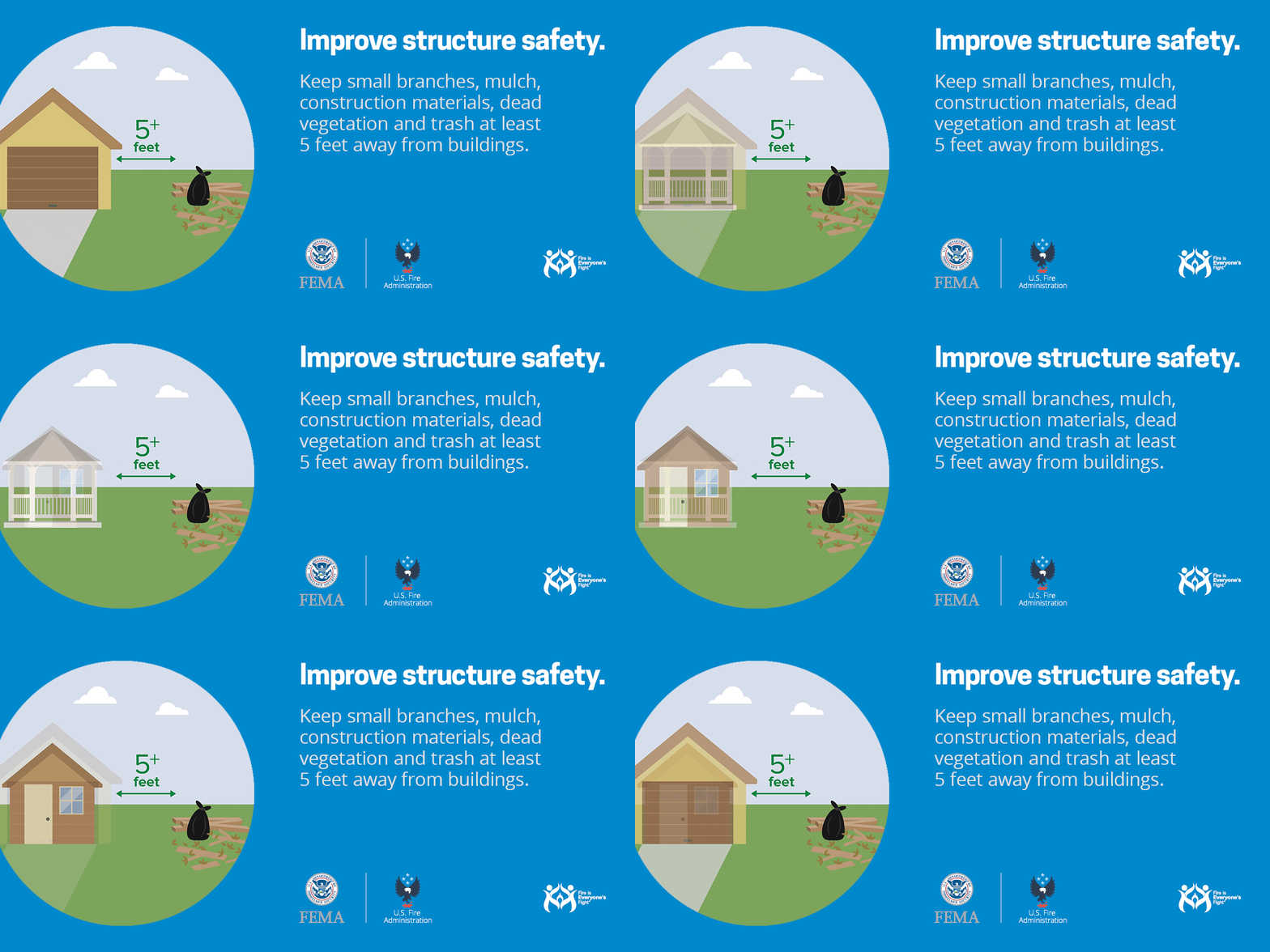
Keep small branches, mulch, construction materials, fuels and trash at least 5 feet away, 10 feet if possible.
Use chimineas, outdoor fireplaces, and fire pits outdoors only and at least 10 feet away from your home or anything that can burn.
The WUI (wildland urban interface) is the zone of transition between unoccupied land and human development. It is the line, area or zone where structures and other human development meet or intermingle with undeveloped wildland or vegetative fuels in Palo Alto, California.
Fire departments across the country are increasingly being called upon to respond to WUI fires, including brush, grass, forest fires or other outdoor fires.
In Palo Alto, California, you may have brush fires, grass fires, forest fires or outdoor fires. These fires can have the same impact when they occur close to homes, neighborhoods and communities.
As the WUI continues to grow, these fires will become an increasing problem for fire departments across the country.
Communities need to understand the risks and make changes to their environments to make them less susceptible to fire.
Free Alerting Tools
These new tools listed below provide the initial data-informed basis for residents to “Know Where You Live” in proximity to the location of the WUI and fire-prone areas. Also used for mass communication, evacuation routes, emergency shelter locations, roads opened/closed, and more during severe weather or emergency fire events.
Wildland Urban Interface (WUI) Fire Property Awareness Explorer. Link provided below:
The FEMA app allows you to receive real-time weather alerts, locate emergency shelters in your area, prepare for common hazards, and more. Download the FEMA App. The FEMA app is your personalized disaster resource, so you feel empowered and ready to take charge of any disaster life throws your way.
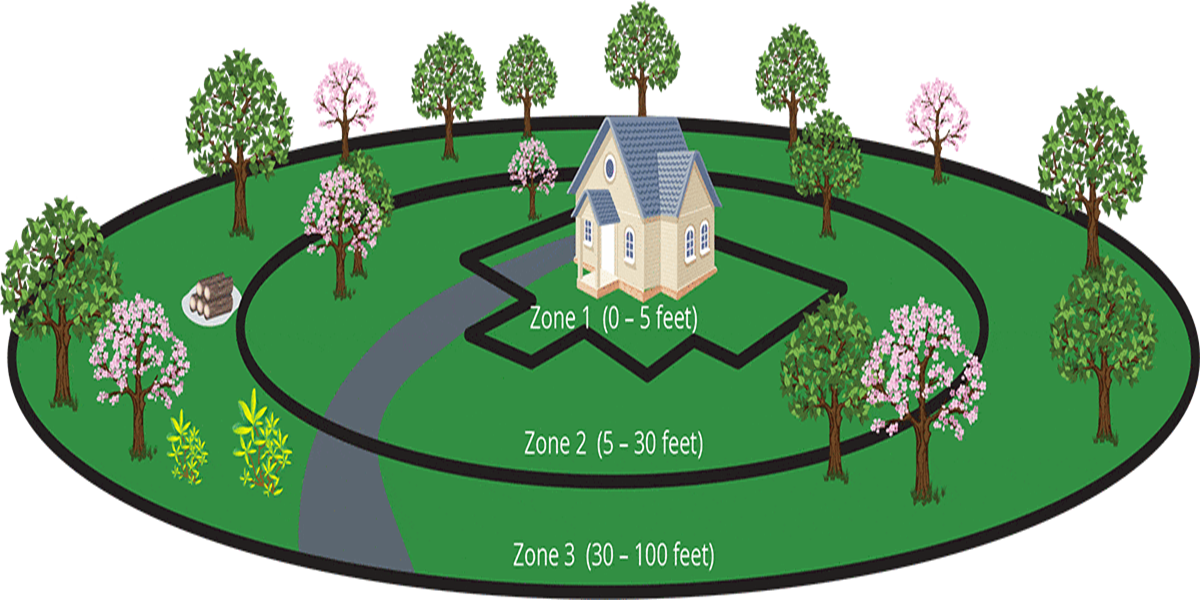
Clear 5-10 feet around structures, remove all fuel sources. Create healthy landscapes, with defensible space fire zones incorporated into its layout.
Defensible Space Fire Zones
Areas of landscaping to consider include the 100-foot area around the structure, which may include your property and the neighbors property.
The community where the property is located in Palo Alto, California may have areas of greenspace within, and wildlands surrounding a community that may contribute to "wildfires" and may be considered WUI fire hazards.
Landscaping around homes and other buildings and infrastructure should be especially well maintained. Dead trees, weeds and brush should be cleared, removed and disposed of properly in Palo Alto, California.
Zone 1
Includes the structure, deck/patio/balcony or other outside entertaining space, landscaping from the home to 5 feet away, sealing doors, windows and update to metal vents for awning and roof. Also cleaning dry leaves and debris from gutters.
Remove all combustible materials like wood mulches, dead or dry vegetation, and leaves and pine needles from roofs and gutters.
Trim tree branches that hang over the roof, eaves and chimney.
Zone 2
Includes the area from 5 feet to 30 feet away from the home, including the property and all outbuildings and the fencing that is attached to the home.
Keep this area lean, clean and green by pruning and removing dead and dying branches from well-spaced bushes and trees.
Make sure to keep this area well maintained and watered during a hot, dry summer, or if you hear of fire danger warnings in your area.
Stack wood piles on bare or gravel areas or in an enclosed shed at least 30 feet from the home.
Zone 3
This is the area farthest from the structure, building or home, extending from Zone 2 to your property’s boundary from 30 to 100 feet.
Reduce fuels by thinning and spacing vegetation vertically and limbing up trees horizontally to interrupt fire’s path and keep flames small and on the ground.
Basements and garages present additional fire safety risks compared to other home areas, flammable liquids, storage of combustibles, gas appliances and electrical tools can lead to fires.
Basements and garages present additional fire safety risks compared to other home areas.
Flammable liquids, storage of combustibles, gas appliances and electrical tools can lead to fires.
Garage fires tend to spread farther and cause more injuries and dollar loss than fires that start in all other areas of the home.
Early Warning Devices
Install a smoke alarm in the basement. Test the alarm each month and clean as needed. The basement smoke alarm should be inter-connected to other smoke alarms in your home.
If you have oil, gas or wood-burning equipment in the basement, you should also have a carbon monoxide alarm installed in the basement.
Utilities
Maintain easy, quick access to your fuse box or circuit breaker panel.
Keep the burner access doors on gas water heaters and gas furnaces closed to prevent flames from escaping and starting a fire.
Housekeeping
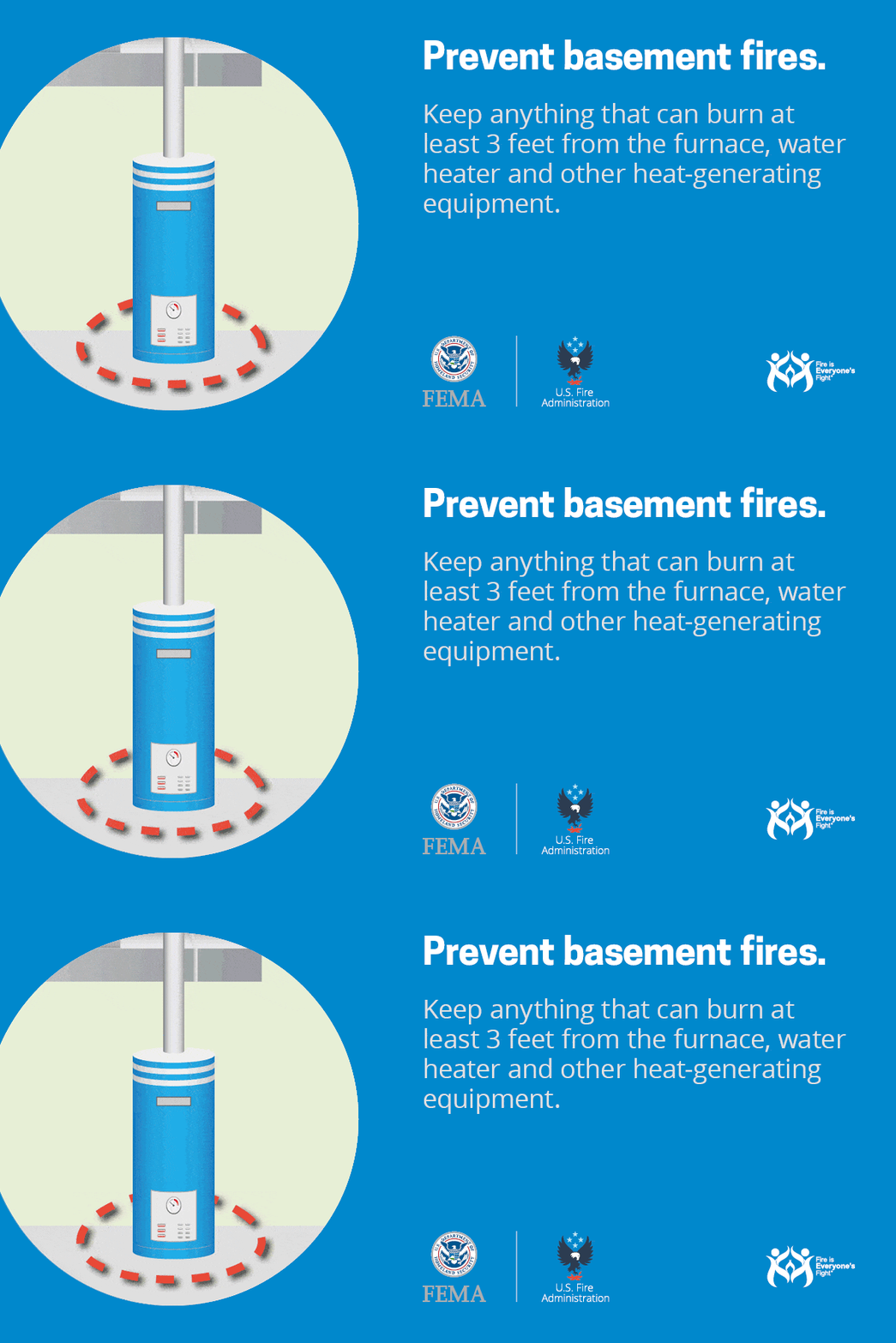
Keep anything that can burn at least 3 feet from the furnace, oil burner, wood stoves, water heaters and other heat-generating equipment.
Keep oily rags in airtight containers and away from heat sources.
Trash should not be stored in the basement.
Washers and dryers should be plugged directly into wall outlets.
Clean lint filters every time you use the dryer. Clean the dryer vent ductwork every year.
Keep stairs free of clutter and safe for quick exit in an emergency.
Garage Fire Safety
Store oil, gasoline, paints, propane and varnishes in a shed away from your home.
Keep items that can burn on shelves away from appliances.
Plug only 1 charging appliance into an outlet.
Don't use an extension cord when charging an appliance.
Constructing a Safer Garage
A 20-minute fire-rated door that is self-closing and self-latching from the garage into the house.
A ceiling made with 5/8-inch Type X gypsum board (or the equivalent) if you have living space above the garage. This type X is fire resistant drywall that enhances fire protection.
A wall with 1/2-inch Type X gypsum board (or the equivalent) if the wall attaches the garage to your home.
An attic hatch cover if you have attic access from the garage.
A heat alarm — not a smoke alarm — in your garage. The heat alarm will sound if the temperature rises too high.
Candles are a part of many celebrations, but open flames make them dangerous if they tip over or when they are placed too close to anything that can burn, USFA.
Candles are a part of many celebrations, but open flames make them dangerous if they tip over or when they are placed too close to anything that can burn.
Improper Candle Use
Consider using battery-operated flameless candles, which can look, smell and feel like real candles.
If you do use lit candles, make sure they are in stable holders and place them where they cannot be knocked down easily.
Keep candles at least 12 inches away from anything that burns.
Blow out (turn off) candles when you leave a room or home, or when you go to bed.
Don't use lit candles in bedrooms, bathrooms and sleeping areas.
Use flashlights, not candles, if you have a power outage.
Lithium-ion batteries and other types of batteries present fire dangers if community residents don't follow product instructions when using, charging, storing or disposing of them, USFA.
Lithium-ion batteries and other types of batteries present fire dangers if community residents don't follow product instructions when using, storing or disposing of them.
Take C.H.A.R.G.E.
Take C.H.A.R.G.E. of battery safety
Choose certified products.
Handle with care.
Always stay alert.
Recycle properly.
Get out quickly.
Educate others.
Lithium Safety Tips
Always use the charger provided by the manufacturer for the device being charged.
You should store lithium-ion batteries at room temperature when possible.
Do not charge lithium batteries at temperatures below 32° °F (0° degrees °C) or above 105° °F (40° degrees °C).
Stop using lithium-ion batteries if you notice an odor, change in color, too much heat, change in shape, leaking or odd noises.
Don't put lithium-ion batteries in the trash. Recycle them at your local battery recycling location.
Store spare lithium-ion batteries away from anything that can burn.
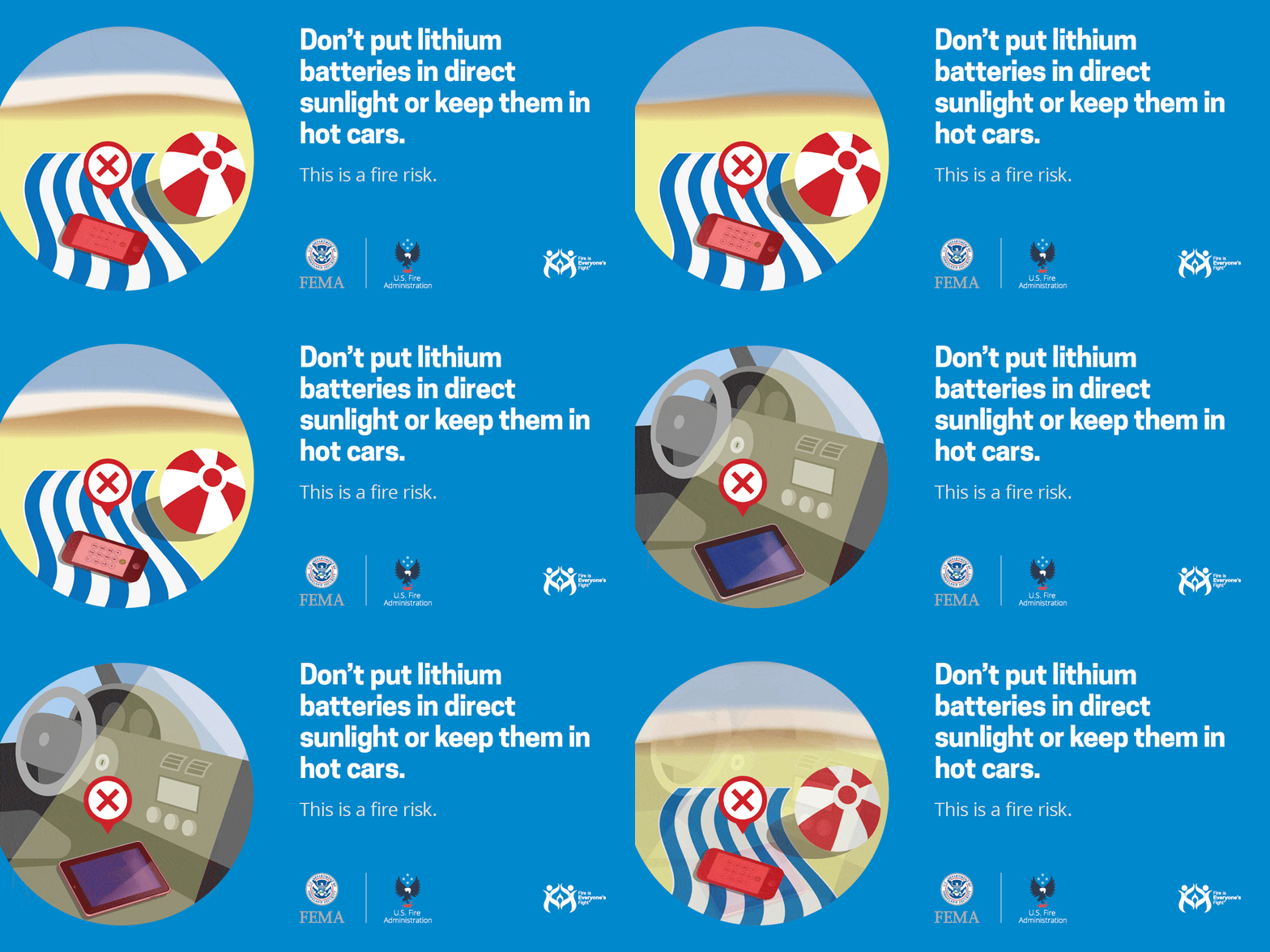
Don't put lithium-ion batteries in direct sunlight or keep them in hot cars. This is a fire risk.
Remove lithium-ion batteries from your checked smart luggage and keep them with you on the plane.
Remove spare, loose lithium-ion batteries from checked luggage and keep them with you on the plane.
Flooding Danger
Notify your local Palo Alto, California fire department before use. Notify your local fire department if you believe that lithium-ion batteries might have been exposed to flooding in your home or garage, especially those found in devices such as E-bikes, golf carts and electric vehicles (EV).
Disconnect any potentially flooded lithium-ion battery-powered devices or vehicles from chargers
Remove any potentially flooded batteries or vehicles from buildings or garages. Separate the vehicle from combustibles and structures by 50 feet on all sides.
If you observe batteries or vehicles emitting a cloud of smoke or gases, or exhibiting a popping or hissing sound, move to a safe distance and notify your local fire department.
Flooded Battery Disposal
It is important to properly dispose of flood damaged lithium-ion powered products. Contact the local fire department in Palo Alto, California to discover where there may be a hazardous waste location and if they accept flooded batteries.
Place small handheld flood damaged lithium-ion powered products in metal or non-combustible tubs and keep at least 6 feet away from debris and structures.
Do not put lithium-ion battery-powered products in with storm debris for pick up.
Never put lithium-ion batteries inside garbage or recycle carts or bins. When a lithium battery expires you must contact the fire department in Palo Alto, California to discover where you might dispose of properly.
Place tape over battery ends and terminals to help prevent accidental discharges and potential fires.
While there are fire safety regulations in place for hotels and motels, homes and apartments used as vacation or short-term rentals are not regulated to the same extent.
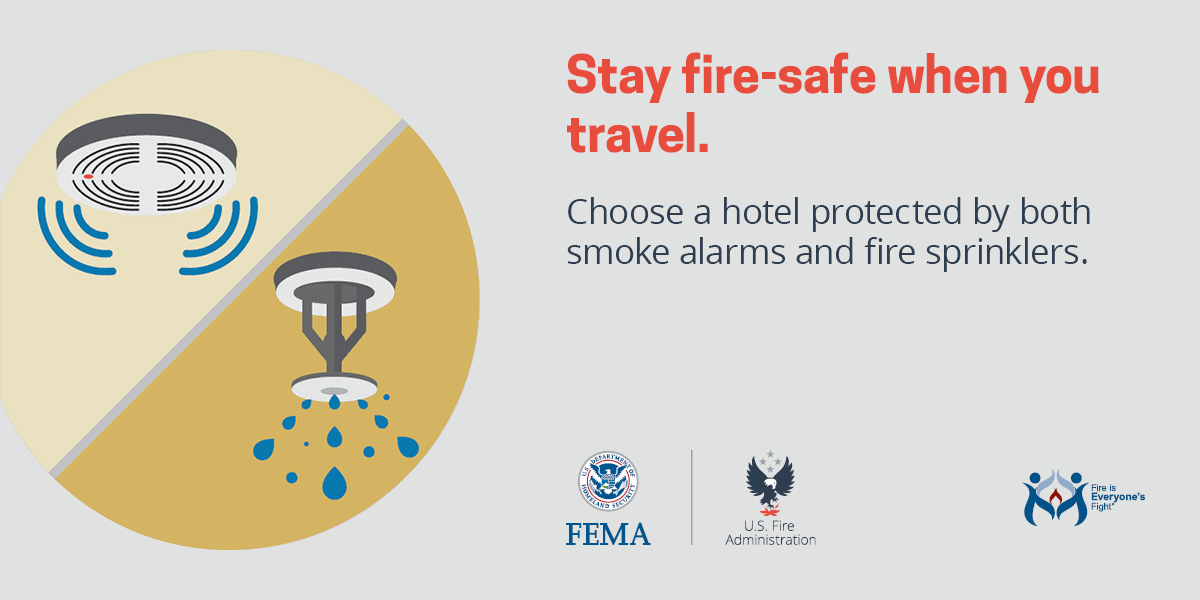
You may not think about fire safety when they are on vacation or traveling for business. Keep your family safe by staying in hotels and motels that have hard wired smoke alarms and an automatic fire sprinkler system in each guest room.
Upon Check-in
Read the evacuation plan carefully, Find the 2 closest exits from your room. Find the fire alarm pull station locations on your floor.
Count the number of doors between your room and the exits. This will help if you need to get out in the dark.
Short-term Rental Safety
Everyone knows the address of the rental.
Everyone knows two ways out of every room and out of the rental if there is an emergency
There are working smoke alarms in every sleeping room, outside each separate sleeping area and on every level of the rental.
There are working carbon monoxide alarms on every level of the rental.
You can open all doors and windows that lead outside.
You choose an outside meeting place a safe distance from the rental.
Everyone knows where to find a first-aid kit.
Each year, there are an estimated 3,900 hotel and motel fires that cause 15 deaths, 100 injuries and $100 million in property losses, USFA
Hotel-Motel National Master List
Visit the Hotel-Motel List to find lodging for you and your family!
Use the Hotel-Motel National Master List to find hotels and motels that have at least 1 hard-wired, single station smoke alarm in each guest room and an automatic fire sprinkler system in each guest room for buildings that are 4 or more stories tall.
The Hotel and Motel Fire Safety Act of 1990 encourages fire safety in places that offer lodging to the public.
Hotel Motel National Master List Link provided below:
Mechanical and electrical issues, along with crashes, are common causes of vehicle fires, USFA.
Pull over as quickly as you can when it is safe.
Once you have stopped, turn off the engine.
Get everyone out of the vehicle. Never return to a burning vehicle. Do not try to fight the fire yourself.
If you think there is a fire under the hood or trunk, do not open it. This could cause the fire to grow.
Move everyone at least 100 feet from the burning vehicle and well away from traffic.
Call 911.
Prevent Vehicle Fire
Have your vehicle serviced regularly by a trained mechanic.
Keep gas cans or propane tanks away from passengers. Tightly seal and place them on a flat surface to make sure they stay upright.
Keep windows open to stop fumes from building up if you must put gas cans or propane tanks inside your vehicle.
Drive safely to avoid an accident.
Electric Vehicles (EV)
Alternative fuel vehicles pose new and dangerous threats to owners and first responders. Before buying an EV, have a qualified electrician install the following below:
Before EV Purchase
Contact a qualified electrician to install a new, dedicated circuit for your EV charging device. Older home wiring may not be suitable for use with EV supply equipment.
Level II charging devices (if that is your preferred charging method).
Charging EV's
Follow manufacturer's guidelines when charging your vehicle. Check with your local dealer if you need additional information.
Purchase a charging device that is certified by a nationally recognized testing laboratory.
Plug Level I EV chargers directly into an outlet designed to handle the amperage of the charging device. Never use a multiplug adapter or extension cord.
Install a residual current device with the charging unit. It will turn off the power if a fault is detected and help prevent a fire.
Place all charging device components out of reach of children when not in use.
Maintain the components of your charging station according to the manufacturer's maintenance guidelines. Signs of excessive wear may indicate a potential shock hazard. Never use an EV charger with obvious signs of damage.
Cover the EV charging station outlet to stop water from entering. Check the manufacturer's guidelines to make sure it is safe to charge your EV in wet conditions.
Recreational Vehicle
CO₂ is an odorless, tasteless, invisible killer that can readily build up within the small area of an RV and cause severe illness and possibly death. Improper use of generators is a leading cause of CO₂ poisoning. Malfunctioning gas-fed appliances are an additional source of CO₂ poisoning
Check propane supply lines for kinks or damage. Test all fitting connections with a gas leak detection device.
Make sure generator exhaust is pointed away and downwind of the RV.
Stay in the cooking area when preparing food. If you leave, turn off the burner.
Have a portable fire extinguisher on board that you can easily reach. Adults should take a brief training course on how to properly use an extinguisher. Remember the acronym P.A.S.S. — Pull, Aim, Squeeze, Sweep.
Keep doors and windows clear for escape and make sure they open easily. Practice a fire escape plan with everyone staying in the RV.
Don't overload the electrical outlets. Using too many electrical appliances at the same time can cause a fire.
Have a trained technician thoroughly inspect your RV at least once a year.
Boats and Marinas
Fires that occur on boats or in marinas can spread quickly and present unique response challenges due to hazardous conditions and limited access.
Install smoke and carbon monoxide alarms to alert occupants to a fire. Have a fire emergency plan and practice it.
Inspect electrical wiring, connections, cords and battery-charging equipment to ensure they are installed properly and in good condition.
Have the appropriate fire extinguishers and make sure they are easily accessible. Train all boaters on how to use them.
Check your cooling and exhaust systems. Make sure they work properly.
Turn off portable heaters when you leave the boat or go to sleep.
Only use certified chargers for personal electronic devices. Don't overload power outlets.
In the Marina's
Ask about the types of fire and emergency features at the marina, including smoke alarms and fire suppression equipment.
Know where the fire extinguishers are located and how to escape.
Smoke only in designated areas away from any fuel-filling or storage areas.
Inspect shore power connections for any obvious signs of damage or improper installations.
Know how to contact help.
If a Boat Fire
Alert boat occupants and quickly get to a safe location.
Discharge fire extinguishers from a safe location, or get to a safe location and contact the fire department.
Severe weather can happen at any time, in any part of the country. That's why it's important for your community to be ready for severe weather events and to understand the fire risks that can come with them., USFA.
Severe weather can happen at any time, in any part of the country. That's why it's important for your community to be ready for severe weather events and to understand the fire risks that can come with them.
Lightning, can cause fires during severe weather events.
Portable generators are useful when the power goes out, but if not used safely, they can cause injuries and death.
Leaking gas lines, damaged gas propane containers and leaking vehicle gas tanks, are all possible during severe weather events.
Appliances and vehicles exposed to water should have batteries disconnected.
Debris near severed electrical wires and transformers are major fire hazards, stay away from them.
Damaged or downed utility lines, should be reported, stay away, find alternate routes, check the FEMA Mobile App.
Exposed electrical outlets and wiring, if any wiring becomes exposed, never touch it, if possible turn off the circuit breaker, for that circuit. If unable get to safe place, use FEMA App for safe routes and emergency shelter locations.
Severe Weather Tips
Never use candles for emergency lighting. Use flashlights and stock up on extra batteries.
Make sure your smoke alarm, carbon monoxide alarm, flashlights all have backup batteries, stored in a safe place.
Use surge protectors.
Generator Safety Tips
Consider unplugging appliances.
Disconnect motor vehicle batteries in flood-prone areas.
Connect appliances to portable generators with heavy-duty extension cords.
Don't fuel your generator when it is running. Spilling gas on a hot engine can cause a fire.
Use portable generators outdoors in well-ventilated areas away from all doors, windows and vents, preferably with exhaust going downwind.
Make sure you have carbon monoxide alarms in your home.
Connect appliances to the generator with heavy-duty extension cords.
Do not use a generator in a wet area. This can cause shock or electrocution.
Keep portable generators outside, away from windows, and as far away from your home as possible.
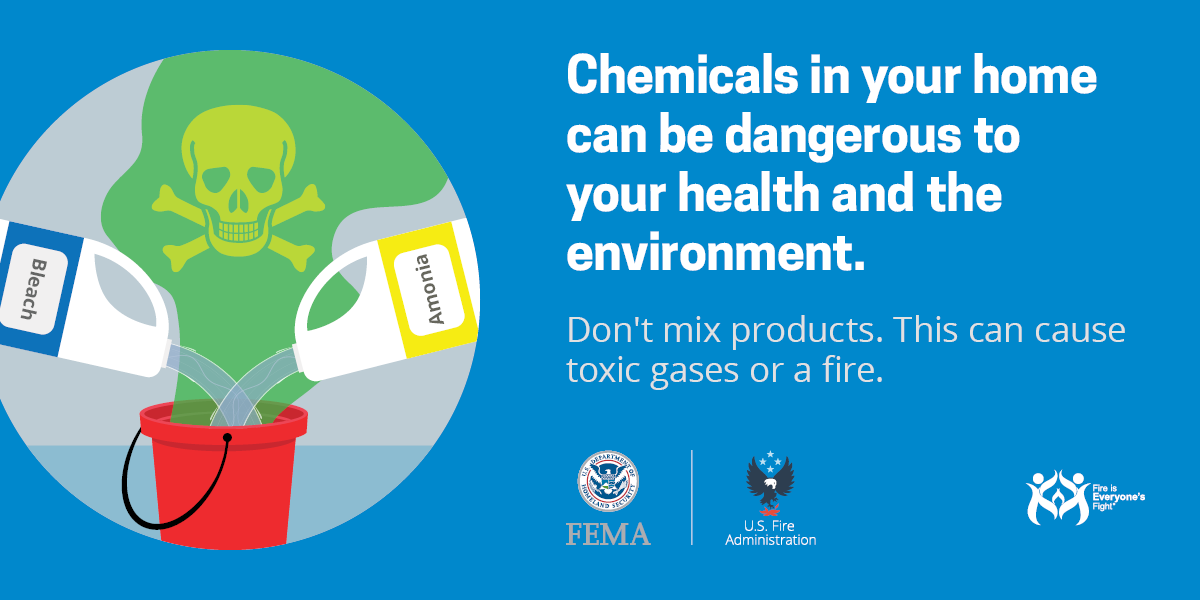
Chemicals and other hazardous materials used in homes can be dangerous to people's health and the environment. It's important that residents follow product instructions when using, storing or disposing of home hazardous materials to prevent fires and unintentional poisoning.
To keep your family safe, follow these safety tips when you use, store or dispose of household chemicals.
Handling Chemicals
It's important that residents follow product instructions read from the label when using, storing or disposing of home hazardous materials to prevent fires and unintentional poisoning.
Only fill portable gasoline containers outdoors in an airy area. Make sure to place the container on the ground when you fill it.
Wear gloves, safety glasses or goggles when you use these materials. Sometimes full body suits, read the label instructions.
Don't mix products. This can cause deadly gases or cause a fire.
Store products in their original containers out of the reach of children and pets. Store anything that can catch on fire away from your home.
Never store materials that can cause a fire in the sun or near an open flame or heat source.
Use safety locks and guardrails on shelves and cabinets when you store materials. This will prevent them from falling or tipping.
Disposing Chemicals
Follow the instructions on the label when you need to throw a product out.
Aerosol cans might contain chemicals that can burn. If you put them in the trash, they can explode or start a fire.
If you have a spill, clean the area and put the containers in an airy place. If you cannot control the spill, or are unsure about cleanup and disposal, call the fire department.
An average of 1,700 home fires per year are caused by instances of spontaneous combustion or chemical reaction.
For some at-risk groups, like children, elders, handicap and people with disabilities, a fall, burn or scald can be a devastating injury. Drownings happen quickly and often they are silent. They are 100% preventable, but to prevent tragedies you must follow simple water safety steps.
Carbon monoxide, also known as CO₂, is called the “invisible killer” because it's a colorless, odorless, poisonous gas. CO₂ poisoning can occur when a fuel-burning appliance or machine, such as a furnace, heater or generator, is not working or vented properly.
Place objects so that they cannot be pulled down or knocked over.
Turn pot handles away from the stove’s edge.
Use dry oven mitts or potholders. Hot cookware can heat moisture in a potholder or hot pad, resulting in a scald burn.
Wear short, close-fitting or tightly rolled sleeves when cooking.
Have a “kid-free zone” of at least 3 feet around the stove.
Prevent Outdoor Burns
Wear short sleeves or roll them up when cooking on the grill.
Use long-handled barbecue tools.
Keep a 3-foot safe zone around grills, fire pits and campfires.
Attend public fireworks displays; this leaves the lighting to the professionals.
Burns & Scalds
General first aid for burns and scalds.
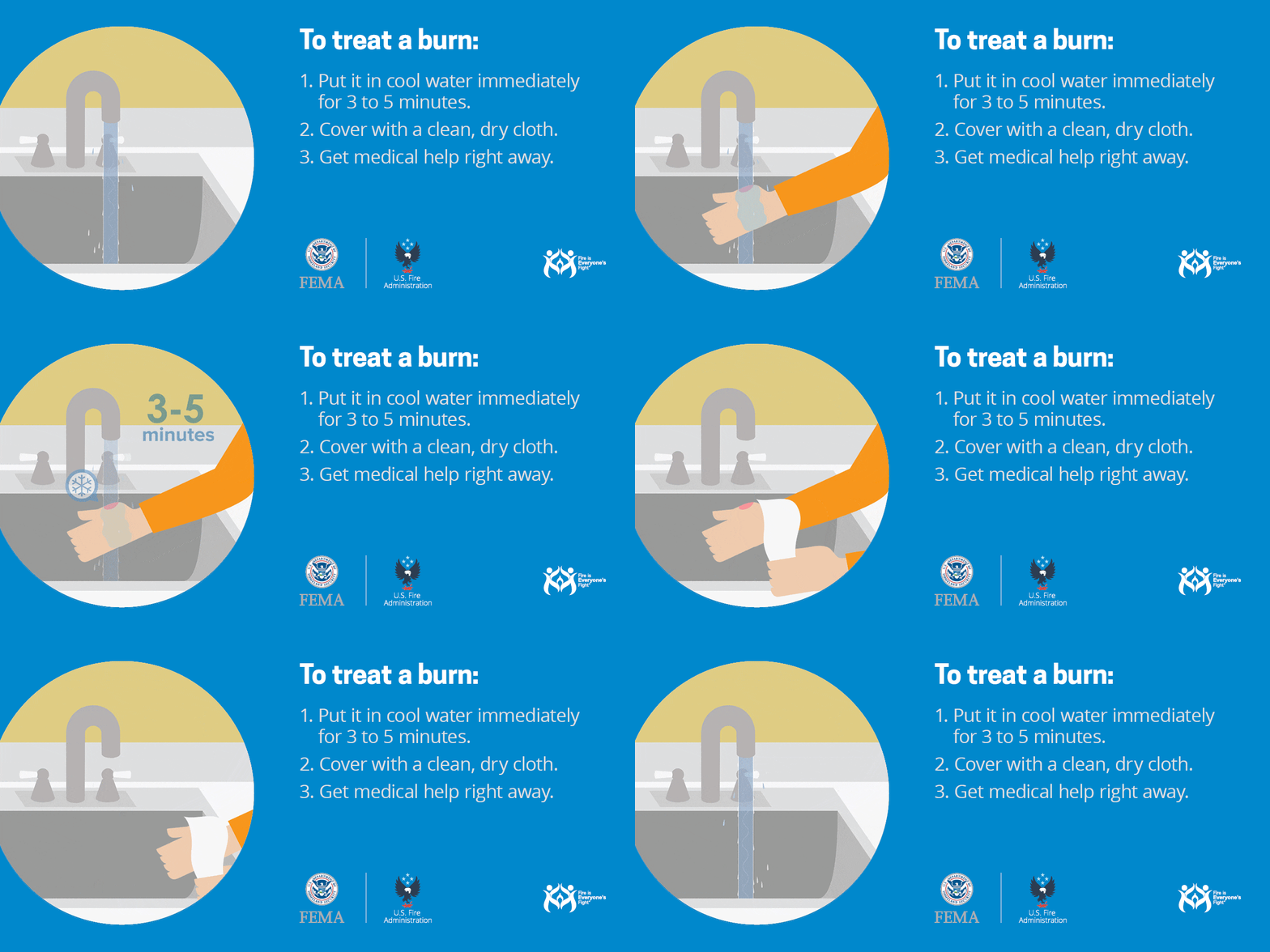
Treat a burn right away by putting it in cool water for 3 to 5 minutes.
Cover the burn with a clean, dry cloth. Do not apply creams, ointments, sprays or other home remedies.
Remove all clothing, diapers, jewelry and metal from the burned area. These can hide underlying burns and retain heat, which can increase skin damage.
See your doctor or call 911 if the burn is larger than your palm.
Calling 911
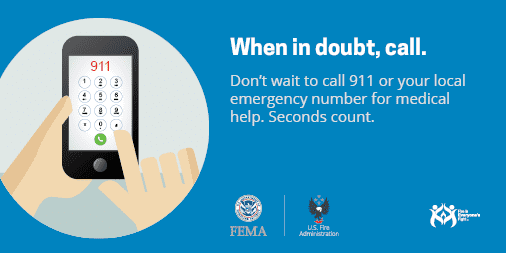
When in doubt, call 911. Don’t wait to call 911 or your local emergency number for medical help. Seconds count.
Make sure everyone in your home knows how to call 911 and give the dispatcher the address.
Make sure your house number can be seen from the road so emergency responders can quickly find you.
Carbon Monoxide
Carbon monoxide, also known as CO₂, is called the “invisible killer” because it's a colorless, odorless, poisonous gas. It is undetectable to the human senses, so people may not know that they are being exposed.
Breathing in CO₂ at high levels can be fatal. More than 150 people in the United States die every year from accidental non fire-related CO₂.
How to Prevent CO₂ Poisoning
CO₂ poisoning can occur when a fuel-burning appliance or machine, such as a furnace, heater or generator, is not working or vented properly.
Install and maintain CO₂ alarms inside your home to provide early warning of CO₂.
Install CO₂ alarms in a central location outside each separate sleeping area and on every level of your home.
Use portable generators outdoors in well-ventilated areas away from all doors, windows and vents.
Make sure vents for the dryer, furnace, stove and fireplace are clear of snow and other debris.
Fall Prevention
Falls are the leading cause of fatal and nonfatal injuries among adults 65 and older.
Remove boxes, newspapers, electrical cords and phone cords from walkways and stairs. Move coffee tables and magazine racks and plant stands from walkways.
Use nonslip mats in your bathtub or shower; consider using a bath seat. Install grab bars in your shower and tub.
To prevent falls, exercise to stay strong and have your vision checked.
Remove or tape down loose rugs.
Place night lights between your bedroom and the bathroom or other trip hazards.
Turn on lights before using the stairs.
Make sure you have handrails on both sides of stairways.
Pools and Swimming
Drownings happen quickly and often they are silent. They are 100% preventable, but to prevent these tragedies, community members must follow simple water safety steps.
Adults need to stay with children when they are in or around water. DO NOT read, use a cell phone or leave children to go someplace else.
For preschoolers, an adult should be close enough to touch the child.
Install 4-sided fencing that separates the pool area from the home and yard. The fence should be at least 4-feet high. Use self-closing and self-latching gates that open outward.
Keep the pool and deck clear of floats, balls and toys after you get out of the pool.
Never swim near a boat, marina or boat launch.
When boating, always use U.S. Coast Guard-approved life jackets.
Roads
Roadway accidents are an all too familiar response for the fire and emergency medical services.
Pedestrians
Walk or run against traffic.
Wear bright clothes so drivers can see you.
Be aware of your surroundings. Don't text and walk or wear headphones with the music so loud that you can't hear your surroundings. Use crosswalks and take off headphones when crossing the street.
Vehicle Tips
If your car is on fire, pull over, turn off the engine and get everyone at least 100 feet from the car and traffic. Call 911.
When you see water covering the roadway, do not drive through the water. Turn around.
Never leave kids or pets unattended in a vehicle. Look before you lock.
Bicycling
Always wear a bike helmet and bright clothes so people can see you. Put reflectors on your bike.
Ride with both hands on the handlebars.
Ride your bike in single file with traffic.
Stop at all stop signs and obey traffic lights.
The bike helmet should fit snugly all around, with no spaces between the foam and the rider's head.
A bike helmet should not sit too high or low on the rider's head. To check, make sure the bottom of the pad inside the front of the helmet is one or two finger widths above the bike rider's eyebrows. The back of the helmet should not touch the top of the bike rider's neck.
We now include free educational training tools, outreach materials, flyers, infographics, music and pictographs. To provide consistent fire prevention and life safety messages from USFA/FEMA, FEMA, Ready.gov and OSHA.
The updated websites now include wildfire and wildland community awareness messages and USFA/FEMA’s "Wildfire" and “Wildland Urban Interface”.
We remain dedicated to increasing community awareness for fire protection and life safety. Spreading our reach to rural villages and small towns to the largest metropolitan cities across America. Please bear with us in rebuilding this site, throughout towns and cities in America.